How to Choose a Meditation Cushion: Height, Shape and Filling
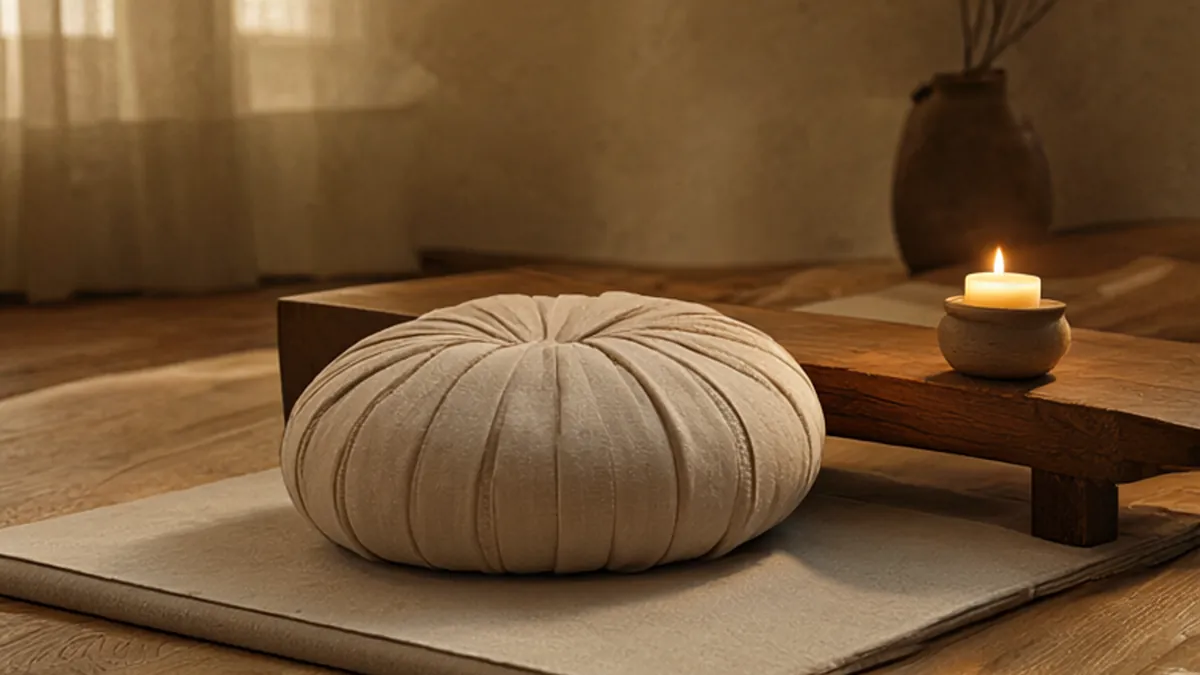
To choose a meditation cushion, start with how you sit. Cross-legged sitters usually do best on a round cushion (zafu) that lifts the hips 4 to 8 inches, so the knees can rest lower than the hips. Kneeling sitters often prefer a firmer, taller cushion or a bolster. Add a flat mat (zabuton) underneath if your knees or ankles press into a hard floor. Buckwheat hull filling is firm and adjustable; cotton or kapok is softer and lighter. A removable, washable cover is worth having for any cushion you use daily.
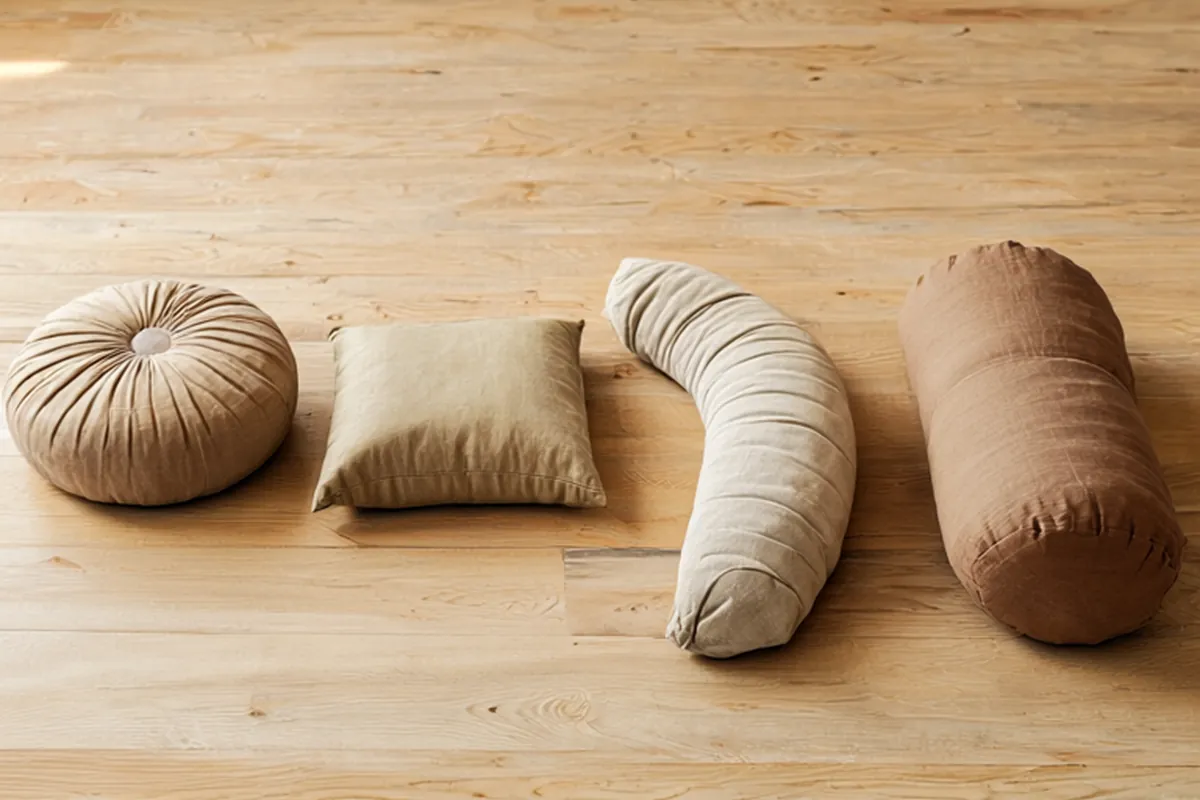
The main types of meditation cushion
| Type | Shape | Best for |
|---|---|---|
| Zafu | Round, often pleated, 12 to 16 in across | Cross-legged postures; kneeling astride the cushion |
| Zabuton | Flat rectangle or round mat | Padding under knees and ankles; used with a zafu |
| Crescent cushion | Half-moon shape | Sitters who want room for their legs at the front |
| Square or rectangular cushion | Flat to medium height | Easy all-round seat, also usable as a floor pillow |
| Bolster | Long cylinder or rectangle | Kneeling, and supporting knees or back in restful poses |
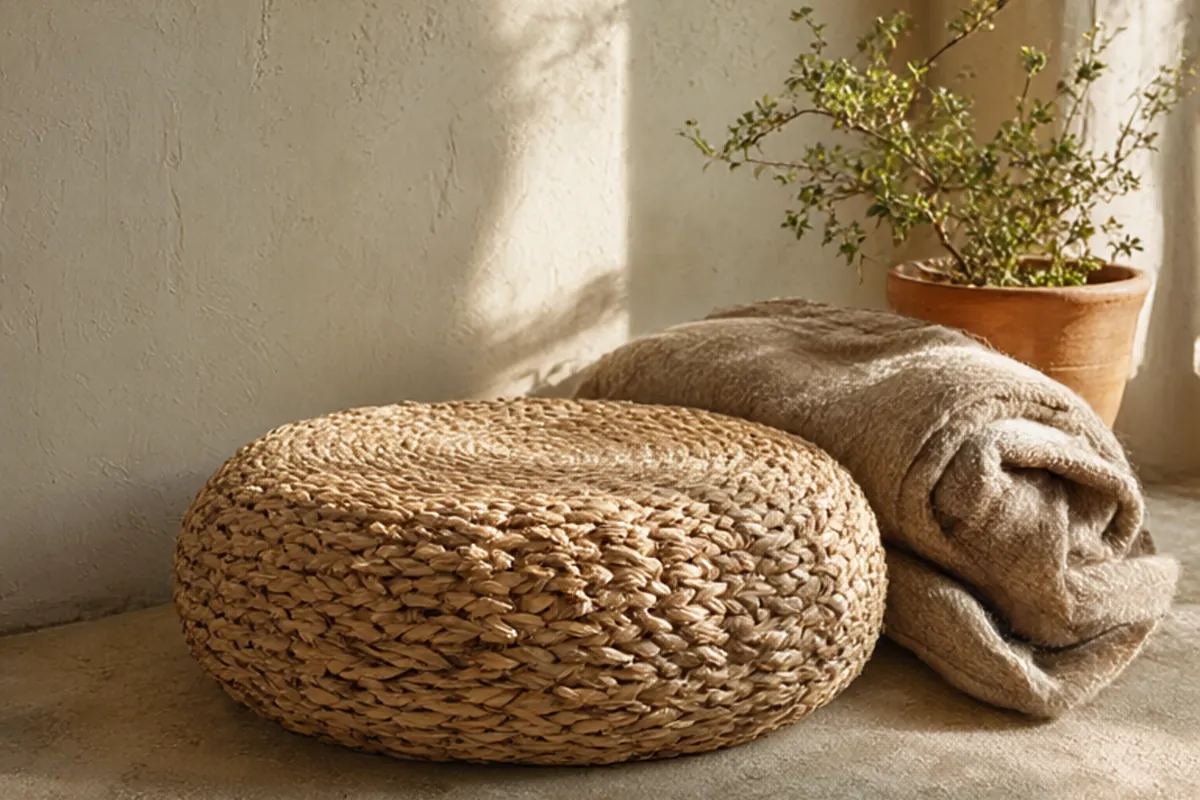
| Woven floor cushion | Round, flat, straw or rattan look | Casual seating and a base layer under another cushion |
Most people do not need all of these. A zafu, or a zafu plus a flat mat, covers the majority of seated practice. Our meditation and yoga collection includes round, square and woven options if you want to compare shapes.
Getting the height right
Height is the single most important choice. The goal is simple: your hips should sit higher than your knees. When they do, the pelvis tilts slightly forward and the spine can stay upright without effort. When the hips are lower than the knees, the lower back tends to round and the legs can go numb.
A quick check
- Sit on the cushion in your usual posture.
- Look at your knees. Are they below the level of your hip bones?
- Can both knees rest on the floor or on a mat, or are they hovering in the air?
- After five minutes, is your back still upright without strain?
If your knees float above the floor, you probably need a taller cushion, or a folded blanket under each knee. If you feel like you are tipping forward, the cushion may be too high, or you may be sitting too far back on it. Try perching on the front third of the cushion instead.
General guide by flexibility
- Very flexible hips: 3 to 4 inches is often enough.
- Average flexibility: 5 to 6 inches suits many people.
- Tight hips or longer legs: 6 to 8 inches, or kneeling instead.
Adjustable fillings, which let you add or remove material, are useful if you are not sure yet.
Filling: buckwheat, cotton or kapok
Buckwheat hulls
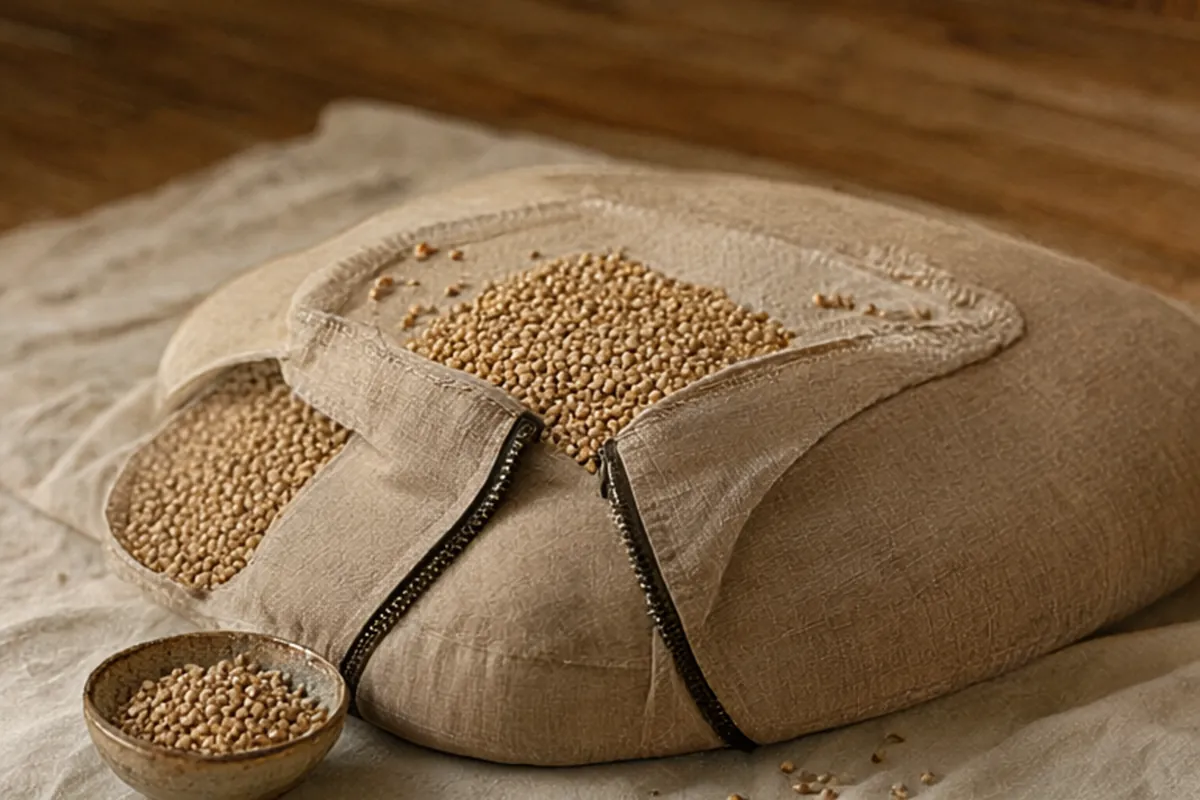
Firm and supportive, they shift to the shape of your body and then stay there. They are heavy, which keeps the cushion from sliding, and many covers have a zipper so you can remove hulls to lower the height. They make a soft rustling sound when you move.
Cotton batting
Softer and quieter, with a classic feel. Cotton can compress over time and is usually not adjustable. Good if you prefer a cushioned seat over a firm one.
Kapok
A light, fluffy plant fiber that feels soft and springy at first. It flattens more quickly under weight than buckwheat and may need plumping.
Foam or mixed fillings
Some modern cushions use foam or a blend. They hold shape well and are light, though they do not mold to your body the way buckwheat does.
If you sit for longer periods, firmer fillings tend to keep their support better. If you mostly sit for short sessions or also use the cushion as a floor pillow, a softer filling may feel nicer.
Covers and materials
- Removable cover: worth it for anything you use daily. A round floor cushion with a washable cover is much easier to keep fresh.
- Cotton: breathable, soft and easy to wash.
- Linen or linen-look: cool in summer and develops a soft, lived-in texture.
- Woven straw or rattan look: natural texture, firmer surface, great as a base or for a decor-forward space.
- Handles: a carry handle sounds minor but makes it easy to move the cushion around the house.
Color matters more than you might think. Neutral, earthy tones blend into most rooms, which means you are more likely to leave the cushion out and ready to use.
Matching the cushion to your posture
- Easy cross-legged: zafu on a flat mat.
- Burmese (both feet on the floor in front): zafu or crescent, with a mat for the ankles.
- Kneeling (seiza): zafu turned on its side, a bolster, or a firm square cushion between the legs.
- Chair: a flat cushion on the seat, or under the feet if they do not reach the floor.
- Lying down or restful poses: a bolster under the knees.
For a simple starter setup, many people pair a cotton zafu with a flat round mat underneath.
Caring for your cushion
A meditation cushion gets daily use, so a little upkeep keeps it comfortable for longer.
- Fluff and reshape it. Buckwheat and cotton both settle. Give the cushion a shake and a few pats before each sit to restore its height.
- Wash the cover, not the filling. Remove the outer cover and wash it as the label suggests. Buckwheat hulls should never be washed; air them in the sun for an hour instead.
- Top up or remove filling. If your buckwheat cushion has gone flat after months of use, adding a cup or two of hulls brings it back. If it feels too high, scoop some out and store them in a jar.
- Store it dry. Keep the cushion off damp floors and away from bathrooms, and stand it on its side if you need floor space.
- Rotate it. Turning the cushion around every week spreads the wear more evenly.
With a bit of care, a well-made cushion can last for years, and the cover can be replaced on its own if it fades or wears thin.
Common mistakes
- Choosing a cushion that is too low. The most frequent problem, and the reason many people give up on floor sitting.
- Sitting in the middle of the cushion. Sit toward the front edge so your pelvis can tilt.
- Skipping the mat. Hard floors are tough on ankles and knees, even for short sessions.
- Buying for looks only. A beautiful cushion that is the wrong height will not get used.
- Forcing a posture. If floor sitting hurts, a chair is a completely valid seat.
If you have knee, hip or back problems, talk to a qualified professional about which posture suits you. A cushion is a support, not a fix.
Frequently asked questions
What height should a meditation cushion be?
Most adults are comfortable between 4 and 8 inches. Pick a height that lets your hips sit higher than your knees while your back stays upright.
Is buckwheat or cotton better for a meditation cushion?
Buckwheat is firmer and adjustable, which suits longer sits. Cotton is softer and quieter. Neither is wrong; it depends on how firm you like your seat.
Do I need a zabuton with my zafu?
It is not required, but it helps on hard floors by padding the knees and ankles. A folded blanket or rug works as a starting point.
Can I meditate on a regular pillow?
Yes, especially to start. Bed pillows are usually too soft to hold your height, though, so a firmer cushion or folded blankets often work better.
Compare shapes and heights in our meditation and yoga collection. Free US shipping on orders over $50 and 30-day returns.