What Is Wabi-Sabi Decor? A Plain Guide to the Beauty of Imperfection
Wabi-sabi decor is a way of furnishing a home that values natural materials, visible wear, simple forms and fewer things over polish and perfection. It comes from a Japanese view of beauty that finds grace in what is rough, aged and incomplete. In practice, that means rooms built around earthy colors, textured surfaces like linen, clay and raw wood, and a handful of objects that feel quiet and lived-in rather than new and showy.
Where the idea comes from
The phrase joins two old Japanese words. Wabi originally described the loneliness of living simply, away from society, and over time came to mean a quiet, understated kind of beauty. Sabi refers to the beauty that comes with age: the patina on metal, the softening of wood, the way a cup changes with years of use. Together they describe an appreciation for things that are humble, natural and touched by time.
The ideas grew alongside the tea ceremony in Japan, where hosts favored simple, uneven tea bowls over perfect imported porcelain. That preference for the modest and the irregular slowly shaped architecture, gardening and the decorative arts. Today, the term is used much more loosely in Western interior design, usually to describe warm, natural, pared-back rooms. That looser modern meaning is the one this guide covers.
The core principles
People often ask for “the three principles of wabi-sabi.” There is no official list, but most writers come back to the same ideas, often summed up as nothing lasts, nothing is finished, and nothing is perfect. In a home, those translate into a few practical habits.
Imperfection is welcome
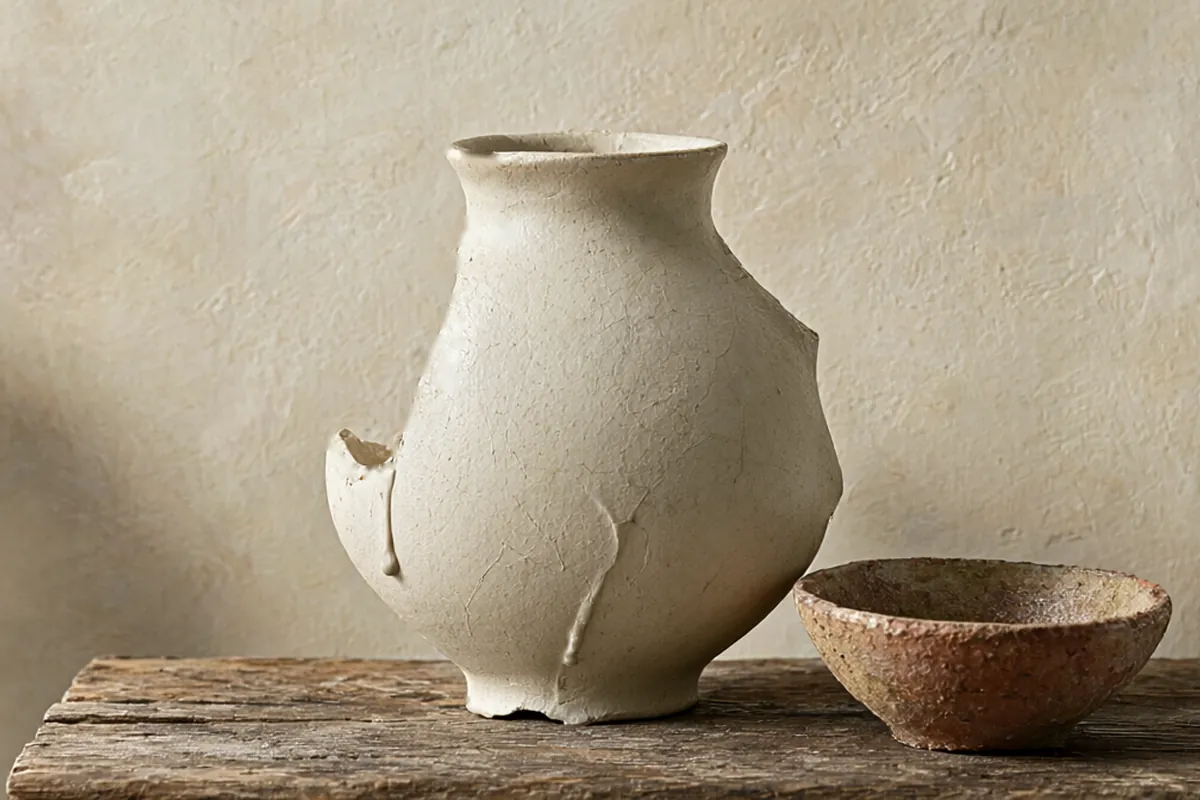
An uneven rim on a vase, a knot in a wooden shelf, a linen cushion that never quite lies flat. Wabi-sabi treats these as character rather than flaws.
Natural materials first
Clay, stone, wood, linen, cotton, paper, iron. Materials that age visibly and feel good to the touch take priority over glossy plastics and mirrored finishes.
Simplicity and space
Fewer objects, chosen with care, with room around them. Empty space is part of the design, not a gap to fill.
A muted, earthy palette
Cream, oatmeal, clay, charcoal, rust, moss. Colors you might find in a field, a riverbed or a potter’s studio.
Things that show their use
A teapot that is used every morning, a well-worn stool, a cutting board with knife marks. Wear is a sign the object belongs to a life.
What wabi-sabi decor looks like
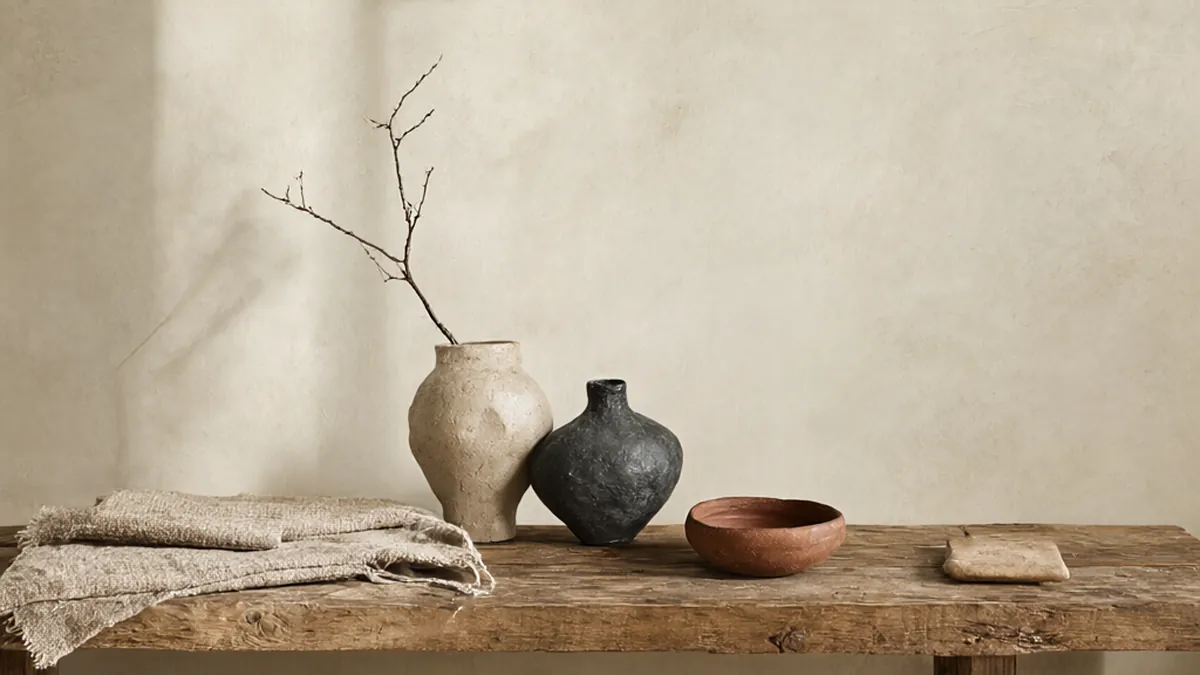
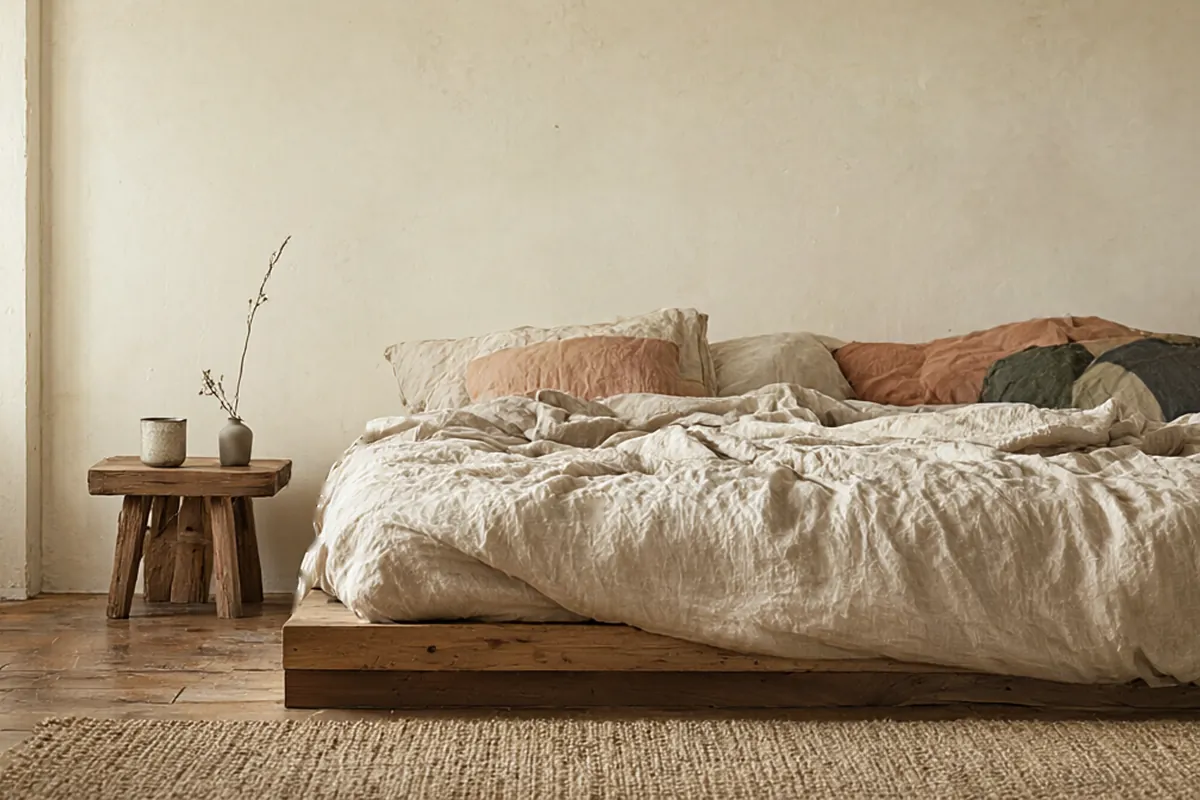
Picture limewashed or plaster-effect walls in warm white, low wooden furniture, rumpled linen, a few stoneware pieces on a shelf and a single branch in a textured vase. Light is soft and natural. Nothing is loud, but nothing feels sterile either.
| Element | Wabi-sabi choice | What to avoid |
|---|---|---|
| Walls | Warm white, limewash, plaster texture, clay tones | Bright white gloss, bold feature colors |
| Furniture | Low, simple, solid wood or reclaimed wood | High-gloss lacquer, chrome, heavy ornament |
| Textiles | Linen, cotton, wool, jute, washed and relaxed | Shiny synthetics, crisp pressed sets |
| Decor | Textured ceramic vases, stoneware bowls, dried stems, stones | Shelves of small trinkets, mirrored accents |
| Lighting | Warm bulbs, paper shades, candles | Cool white overhead light |
The ceramic vase is often the easiest place to start, because one good piece can set the tone for a whole shelf. Look for matte or crackled glazes, irregular shapes and a surface that invites touch. Our wabi-sabi vases collection gathers ceramic pieces with stone-like, ribbed and pebbled textures in warm whites, khaki and charcoal.
Wabi-sabi vs. minimalism and Japandi
These styles get mixed up because they share a love of calm, uncluttered rooms. The difference is in the feeling.
- Minimalism aims for clean lines, smooth surfaces and as few objects as possible. It can feel cool and precise.
- Wabi-sabi also keeps things simple, but it embraces texture, age and irregularity. It feels warmer and more organic.
- Japandi blends Japanese simplicity with Scandinavian comfort, usually with lighter woods, practical furniture and a slightly more polished finish. Many Japandi rooms borrow wabi-sabi accents such as a rough vase or a clay bowl.
You do not have to pick one. A tidy, minimal room becomes more wabi-sabi the moment you add natural textures and a few objects with a bit of history.
How to bring wabi-sabi into your home
1. Edit before you buy
Wabi-sabi starts with taking things away. Clear one surface completely, then put back only what you use or truly like. The empty space you are left with is the backdrop for everything else.
2. Swap one material at a time
Replace a polyester throw with linen, a plastic storage box with a woven basket, a glossy vase with a matte ceramic one. Small swaps add up and keep the cost manageable.
3. Build vignettes in odd numbers
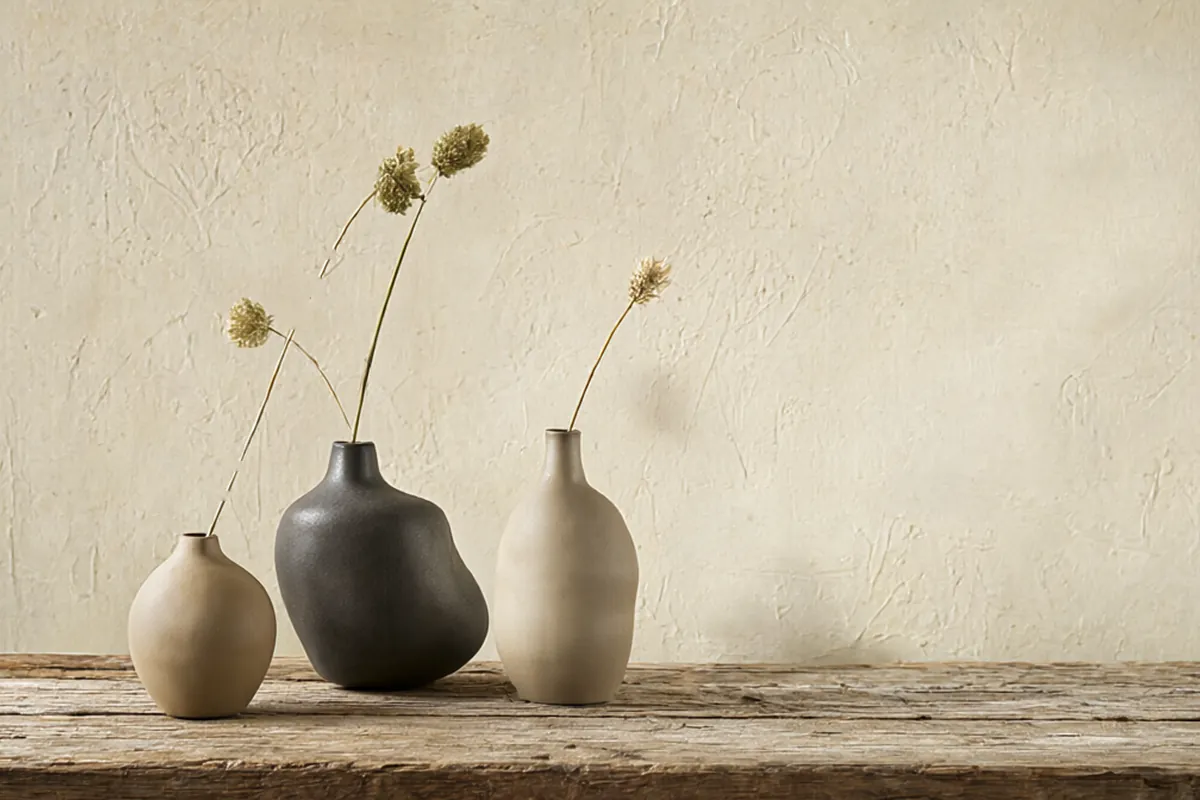
On a shelf or console, group three objects of different heights: a tall vase, a low bowl and a stone or candle. Let them breathe with space on either side.
4. Use dried stems and branches
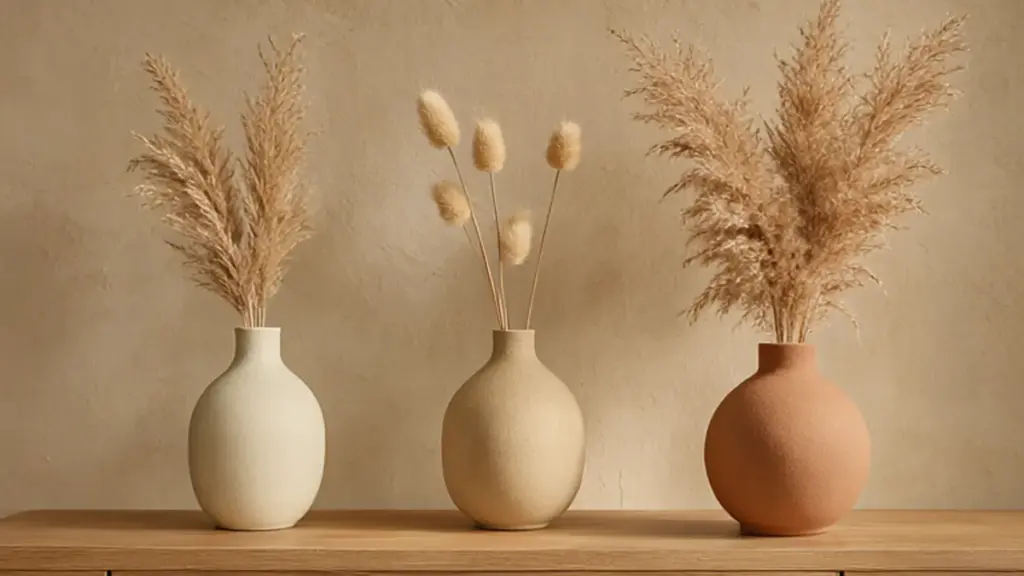
Dried grasses, a single bare branch or a few seed heads last for months and suit the palette perfectly. A slim vase with a narrow opening holds one or two stems upright without fuss.
5. Bring in warm, low light
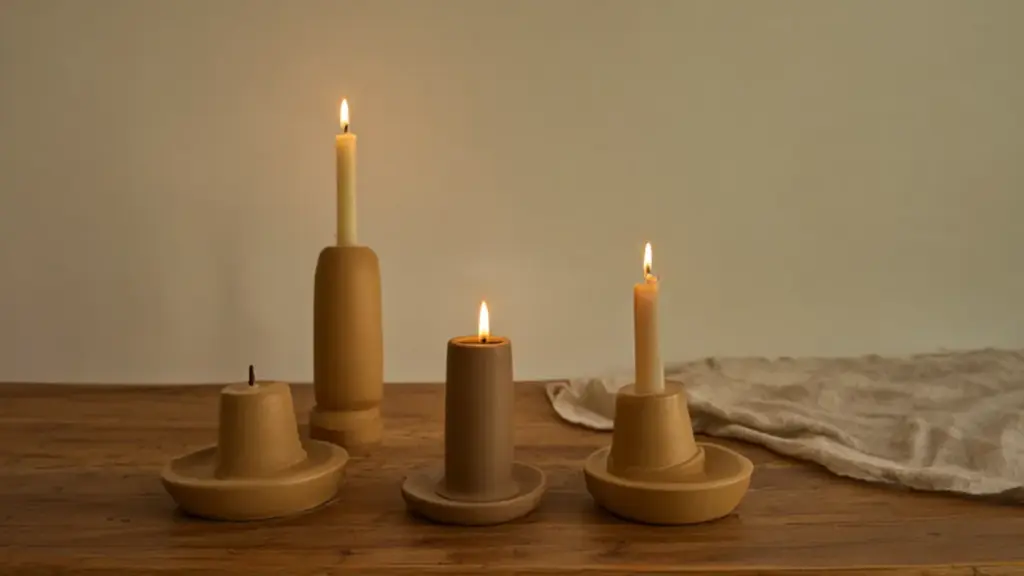
Swap cool bulbs for warm ones, and add candles in simple ceramic or iron holders for evenings. Our candle holders include matte ceramic jars and plain iron taper holders that fit the look.
6. Use your everyday objects
A stoneware teapot and a couple of mismatched cups left out on a wooden tray are pure wabi-sabi. Objects in daily use carry more character than anything purely decorative.
Is wabi-sabi decor expensive?
It does not have to be. The style is built on restraint, so you are buying fewer things. Thrift stores, flea markets and your own cupboards are full of worn wood, old baskets and plain pottery. Spend where it shows: one or two textured ceramic pieces, good linen for the bed or sofa, and warm lighting. A single tall textured ceramic vase with a dried branch can carry an entire entryway.
Common mistakes
- Buying “distressed” everything. Wabi-sabi is about honest age and natural texture, not fake cracks on every surface.
- Too many small objects. A shelf of twenty little things reads as clutter, however earthy the colors.
- A cold palette. Grey on grey with cool lighting tips into stark minimalism. Add warmth with wood, clay and candlelight.
- Treating it as a theme. You do not need Japanese motifs everywhere. The feeling matters more than the references.
Frequently asked questions
What are the three principles of wabi-sabi?
There is no official list, but the ideas are often summed up as nothing lasts, nothing is finished, and nothing is perfect. In decor, that means welcoming natural wear, simplicity and irregular, organic shapes.
What colors are used in wabi-sabi decor?
Muted, earthy tones: warm white, cream, oatmeal, clay, rust, charcoal and soft greens like moss or sage. Colors drawn from natural materials rather than bright accent shades.
Is wabi-sabi the same as Japandi?
No. Japandi blends Japanese and Scandinavian design and tends to be a little more polished. Wabi-sabi leans more into texture, age and imperfection. The two work well together.
How can I make a room feel wabi-sabi quickly?
Clear one surface, swap synthetic textiles for linen or cotton, add a matte textured vase with a dried branch, and switch to warm lighting. Those four changes shift the mood of a room in an afternoon.
Start with one piece you love. Browse our wabi-sabi ceramic vases, with free US shipping on orders over $50 and 30-day returns.