How to Clean a Cast Iron Teapot Without Ruining It
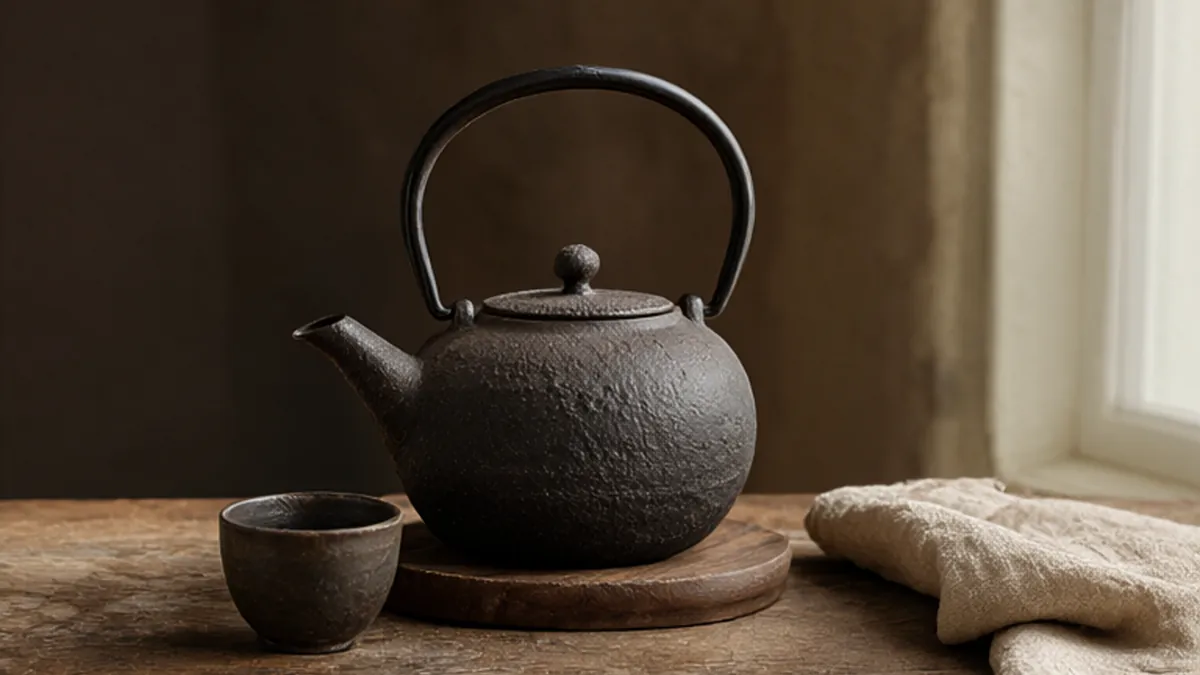
To clean a cast iron teapot, rinse it with hot water after each use, never use soap or a scouring pad on the inside, and dry it completely, ideally by leaving the lid off while it is still warm. Wipe the outside with a soft dry cloth. Small rust spots can be loosened with a soft brush and a rinse of used tea or diluted vinegar, then dried well. The two rules that matter most: keep it dry, and keep it away from harsh cleaners.
First, know which kind of teapot you have
Most cast iron teapots sold today fall into one of two groups, and the cleaning advice is slightly different for each.
| Type | Inside | Typical use | Cleaning notes |
|---|---|---|---|
| Enamel-lined teapot | Smooth glossy coating, often black | Steeping tea, not for the stove | Easy to rinse; avoid knocks and abrasives that can chip the coating |
| Bare cast iron kettle | Raw, matte iron | Boiling water, sometimes on a stove | Can rust if left wet; needs careful drying |
Look inside with a light. If you see a smooth, slightly shiny surface, it is lined with enamel. If it looks like rough dark metal, it is bare iron. When in doubt, check the product description or the instructions that came with it. Most decorative teapots for steeping tea, including the plum and bamboo cast iron teapot in our range, are meant for brewing with hot water poured in, not for direct heat.
Daily cleaning: the two-minute routine
Cast iron does not need much. What it needs is consistency.
- Empty it soon after use. Do not leave tea sitting inside overnight. Tip out the leaves and remaining liquid while the pot is still warm.
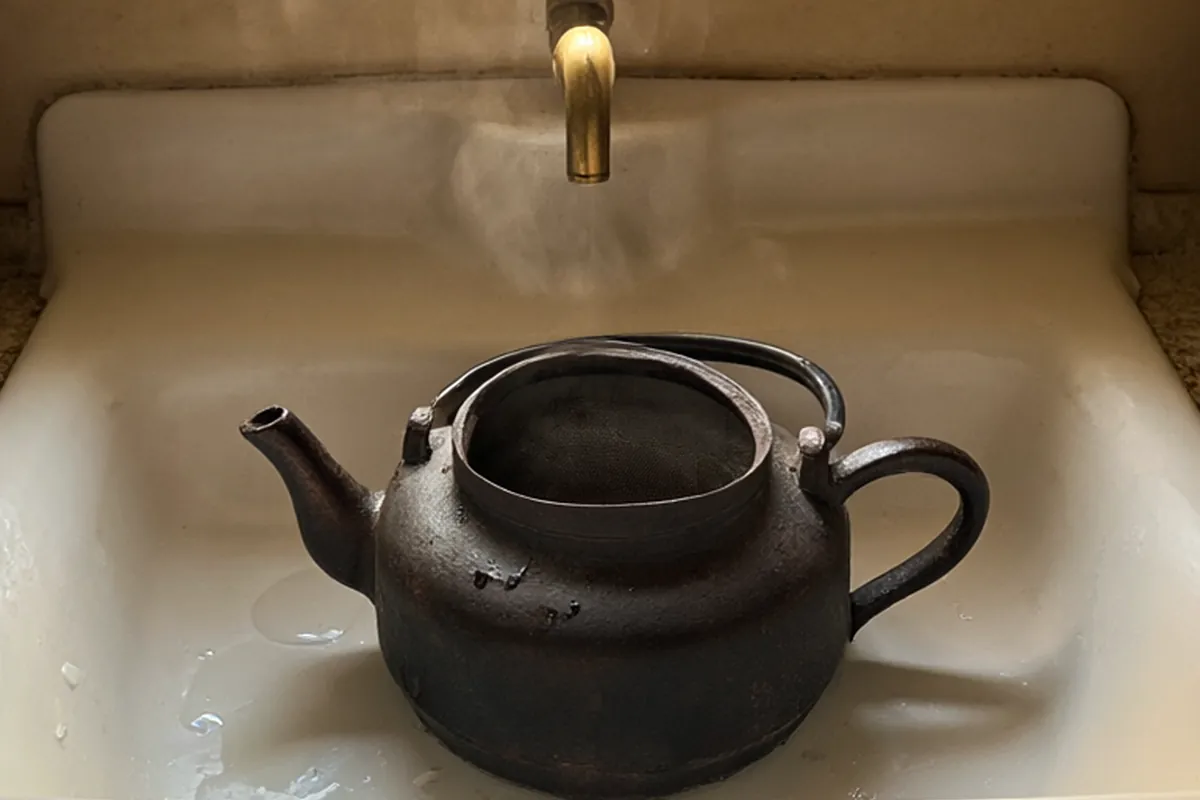
- Rinse with hot water. Swirl hot water around the inside and pour it out. Repeat once or twice until it runs clear.
- Clean the infuser separately. Most teapots come with a stainless steel strainer. Rinse it under the tap and use a soft brush on the mesh if leaves are stuck.
- Wipe the outside. Use a soft dry cotton cloth. A slightly damp cloth is fine for marks, followed by a dry one.
No soap is needed for the inside. Tea leaves behind tannins and a little residue, and hot water handles this well. Soap can leave a taste and, on bare iron, can strip the thin protective layer that builds up with use.
Drying properly is the real secret
Almost every problem with a cast iron teapot, especially rust, starts with moisture left inside. Drying is the step most people rush.
Let residual heat do the work
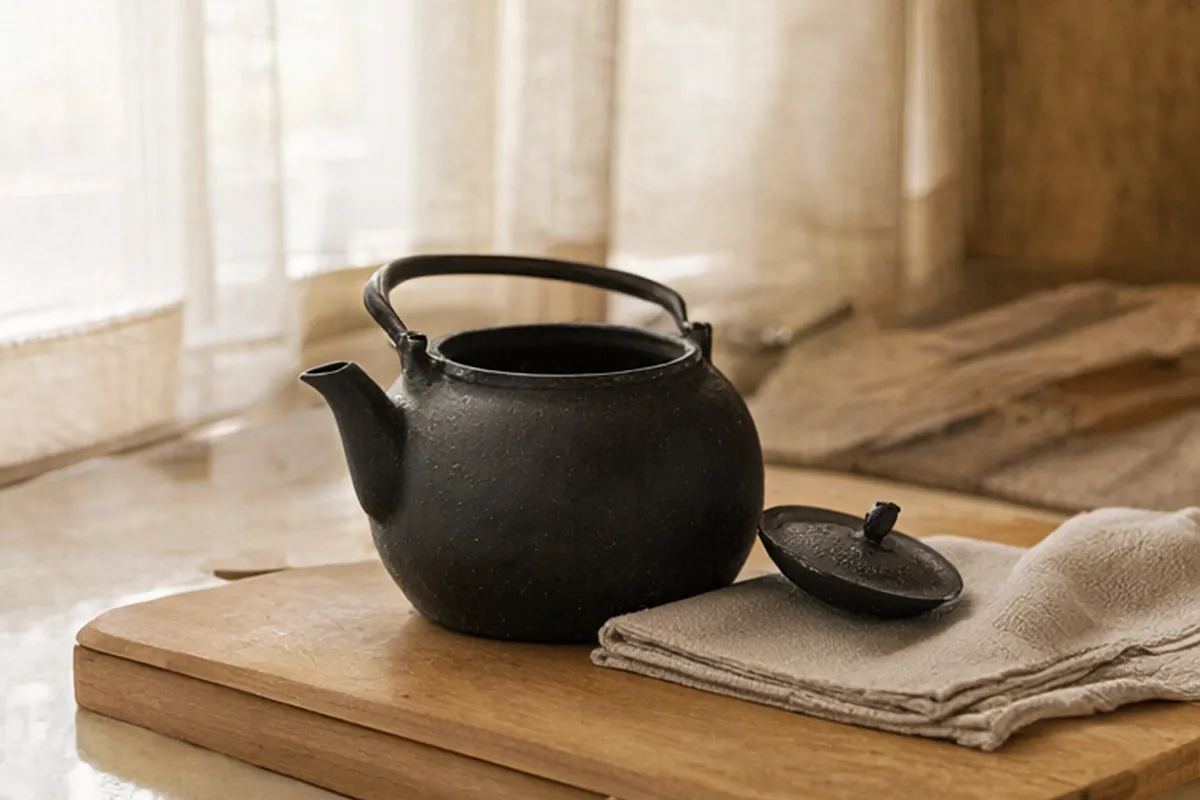
After rinsing with hot water, take off the lid and set the pot upright on a dry surface. The warmth of the iron helps evaporate the last drops. Leave the lid off until the pot is fully cool and dry, which often takes 20 to 30 minutes.
Dry the lid and spout too
Water likes to hide in the spout and on the underside of the lid. Wipe the lid with a dry cloth and tip the pot slightly so the spout drains. A rolled corner of a cotton towel helps reach inside the spout opening.
Low heat for bare iron only
If you have a bare iron kettle that is designed for the stove, you can set it over very low heat for a minute or two after rinsing to drive off moisture. Do not do this with an enamel-lined teapot, which is generally not made for direct heat and can crack or chip.
Stains, tea build-up and white film
Over time you may notice a brown tint, a light crust or a white chalky film inside. Most of the time this is harmless.
- Brown tea staining is normal, especially on bare iron. Many owners see it as part of the pot’s character and leave it alone.
- White film is usually mineral deposit from hard water. It shows up more if you boil or leave tap water in the pot.
- A sticky or uneven layer means residue is building up faster than it is being rinsed away.
For mineral film, fill the pot with warm water and a splash of white vinegar (about one part vinegar to four parts water), let it sit for 15 to 30 minutes, then pour it out and rinse several times with hot water. Dry thoroughly. Do this only occasionally, not as a daily habit. Using filtered water for tea is the easiest way to slow mineral build-up in the first place.
Dealing with rust
A few orange spots do not mean the teapot is ruined. Rust is common, especially on bare iron or on the rims and edges where enamel does not reach.
Light surface rust
- Gently brush the spot with a soft brush, such as a clean toothbrush or a bamboo tea brush. No steel wool.
- Rinse with warm water.
- Many tea drinkers then brew a strong pot of used tea leaves and let it sit for 20 minutes. The tannins in tea react with the iron and can darken the spot. Pour it out and rinse.
- Dry fully with the lid off.
Rust on the outside
The outside of many teapots has a painted or lacquered finish. Do not scrub it. Wipe the area with a soft dry cloth. A tiny amount of neutral cooking oil on a cloth can be buffed in for dull patches on bare iron, then wiped away so nothing is left sticky.
When rust keeps coming back
If rust reappears quickly, the pot is likely staying damp between uses or being stored in a humid place. Change the drying habit first. If the enamel lining is chipped and rust is forming under it, the pot may be better used for display, or for decorative purposes only.
What to avoid
- Dishwashers, every time.
- Dish soap or detergent on the inside.
- Steel wool, scouring pads or abrasive powders.
- Soaking in water for long periods.
- Putting enamel-lined teapots on a stove, flame or induction plate unless the maker says it is safe.
- Sudden temperature shocks, like pouring cold water into a very hot pot.
- Storing the pot with the lid on while still damp.
Storage between uses
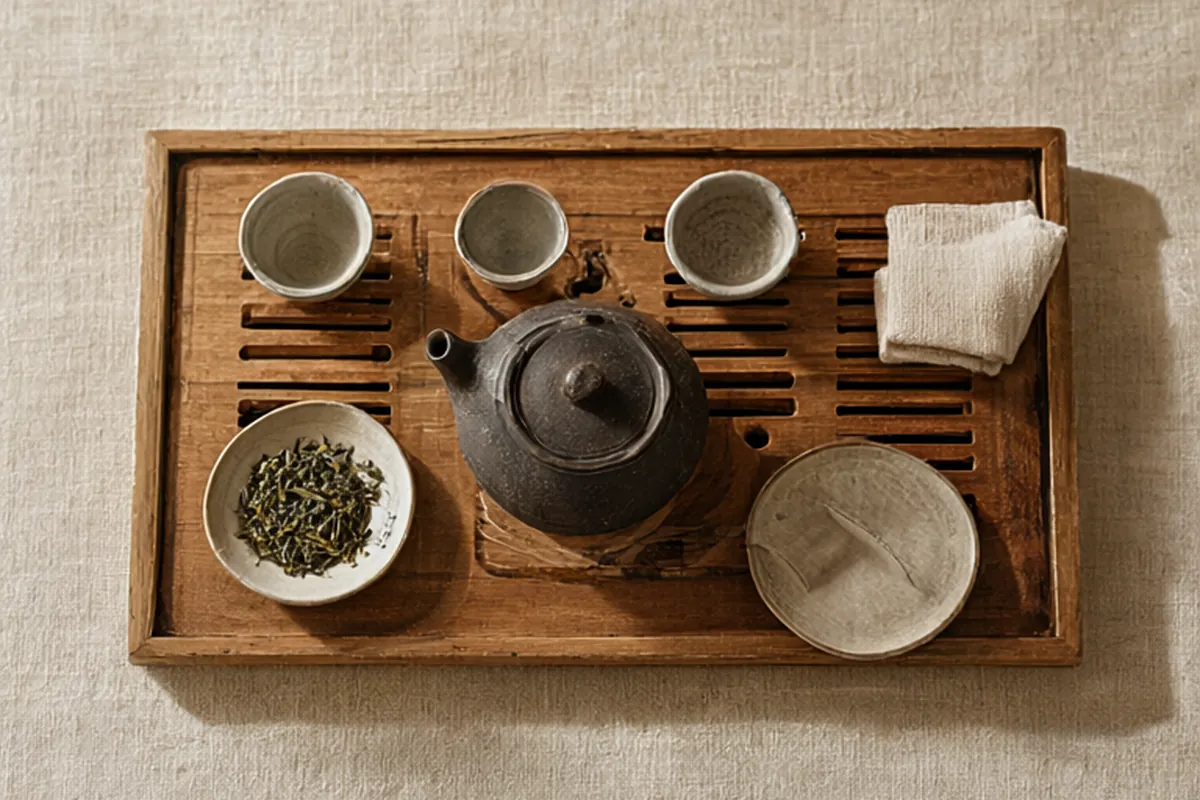
Store your teapot in a dry, well-ventilated spot, ideally on an open shelf or a tea tray rather than a closed damp cupboard. Rest the lid slightly ajar or set it beside the pot so air can circulate. If you will not use the teapot for weeks, make sure it is bone dry and consider placing a folded paper towel inside to absorb any humidity.
Use is actually good for a cast iron teapot. A pot that is rinsed and dried regularly tends to stay in better shape than one left forgotten at the back of a shelf.
Care notes here are general guidance. Always follow the care instructions that come with your own teapot, since linings and finishes vary between makers.
Frequently asked questions
Can I use soap to clean a cast iron teapot?
It is best not to use soap on the inside. Hot water is enough for daily cleaning. A mild soap on a soft cloth is fine for the outside if it gets greasy, followed by drying.
Is rust in a cast iron teapot dangerous?
Small surface rust spots are common and can usually be brushed and rinsed away. If rust keeps forming or the inside is flaking, stop brewing in it and use it for display instead.
How do I remove the white film inside my teapot?
The white film is usually hard water minerals. Soak with warm water and a little white vinegar for 15 to 30 minutes, rinse several times, and dry well.
Can a cast iron teapot go on the stove?
Only if the maker says so. Most enamel-lined teapots are for steeping, not boiling. Bare iron kettles are often made for heating water, but always check first.
Looking for a pot to care for? Browse our tea ware collection, from cast iron to stoneware and glass. Free US shipping on orders over $50 and 30-day returns.