How to Use a Backflow Incense Burner (and Why the Smoke Won’t Flow Down)
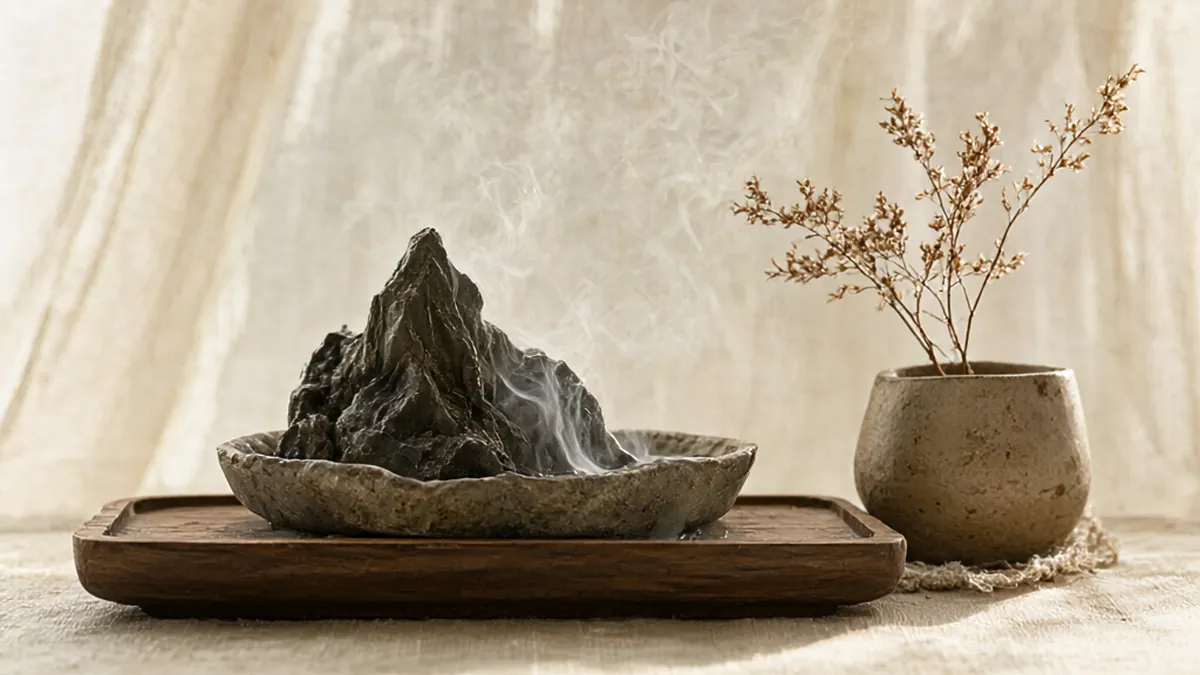
To use a backflow incense burner, light the tip of a backflow cone (the kind with a hollow tunnel in its base), let it flame for a few seconds, blow the flame out, and set the cone on the burner’s top hole. Within a minute or two, smoke starts to sink through the burner and pour out over its “waterfall” or “pond” in a slow, misty stream. The rest of this guide covers why that happens, how to get a smooth flow every time, and what to check when the smoke stubbornly drifts up instead.
How a backflow incense burner works
A regular incense cone sends smoke straight up, because hot smoke is lighter than the air around it. A backflow cone is different. It has a narrow channel drilled up through its middle, open at the bottom. As the cone burns down, smoke is drawn through that channel and exits from the base rather than the tip. By the time it leaves the cone, that smoke has cooled a little and carries heavier particles, so it behaves less like a rising plume and more like a low fog.
The burner gives that fog somewhere to go. Under the cone hole there is a small internal passage that leads to one or more outlets: a carved stream, a set of steps, a tiny lake, a lotus leaf. Gravity and the cooler smoke do the rest. That is why these burners are often shaped like mountains, waterfalls or ponds. The design is part sculpture and part tiny chimney in reverse.
Two things follow from this. First, you need backflow cones, not standard cones or sticks. Second, the effect depends heavily on the air in the room. Drafts, a ceiling fan or an open window will break the stream up before it has a chance to settle.
What you need
- A backflow burner. Ceramic, clay and resin versions all work. Ceramic and clay hold up well to heat around the cone hole; resin burners are lighter and often more detailed, but the cone should never touch resin directly without a heat-safe insert or cup.
- Backflow cones. Look for the hollow base. If you turn a cone over and see a small hole, it is a backflow cone.
- A lighter or long match. A long-reach lighter keeps your fingers away from the flame.
- A heat-safe surface. A ceramic tray, stone coaster or wooden tray with a ceramic plate on top.
- Tweezers (optional). Handy for placing and removing cones and ash.
Browse our incense holders and backflow burners in ceramic, clay and resin. The ceramic backflow burner is a good first pick if your room tends to be drafty, because the cover keeps air movement away from the smoke.
How to use a backflow incense burner, step by step
1. Choose a still spot
Place the burner on a flat, stable surface away from fans, air vents, open windows and doorways. A bookshelf, side table or the back of a desk often works better than a windowsill. Smoke needs calm air to settle into a stream.
2. Light the cone tip
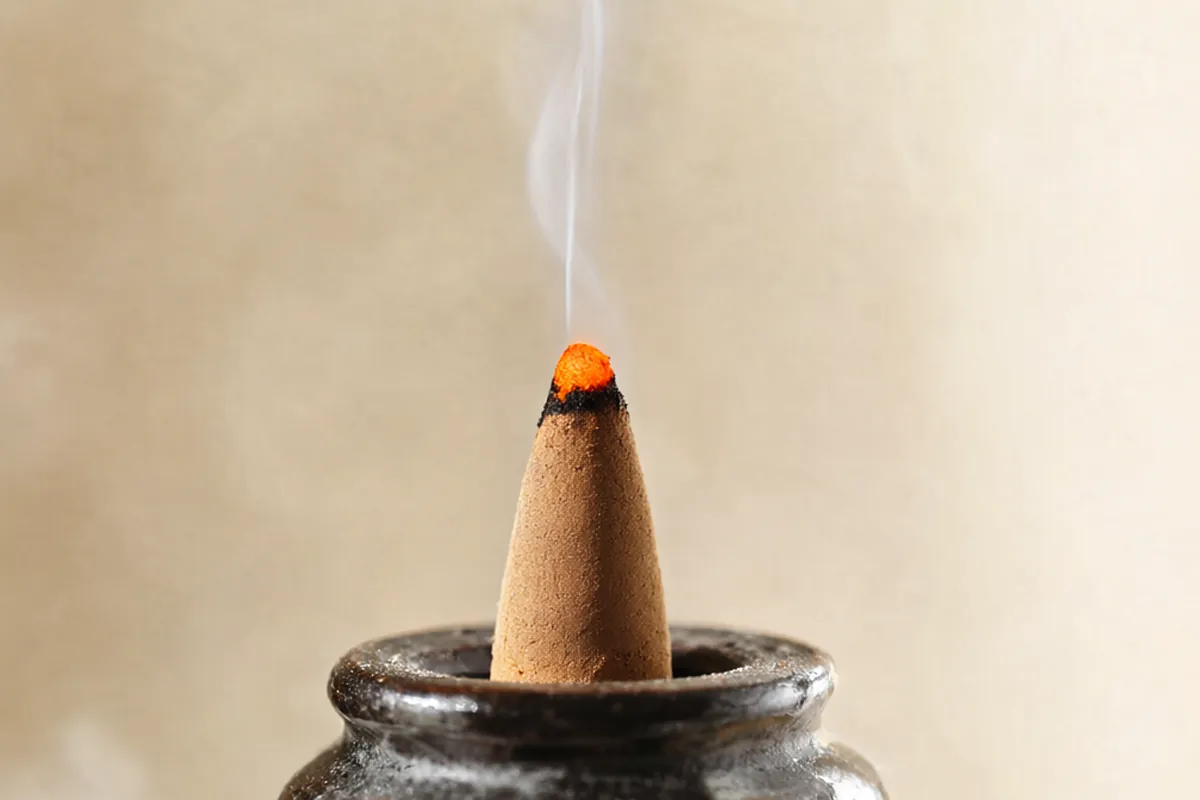
Hold the cone by its base and light the pointed tip. Let it burn with a small flame for about five to ten seconds, until the tip glows evenly. Lighting it too briefly is one of the most common reasons a cone goes out halfway.
3. Blow out the flame
Gently blow or wave the flame out. You want a glowing ember and a thin line of smoke, not a flame.
4. Set the cone on the hole
Place the cone upright on the burner’s cone hole so the hollow base sits directly over the opening. If the cone tilts, the smoke escapes from the side of the base instead of entering the burner. Some burners include a small ceramic seat or metal cup; use it.
5. Wait a minute or two
At first, smoke will rise from the tip like any cone. After about a minute, once the ember reaches the internal channel, smoke begins to sink and roll out of the burner’s outlets. A typical cone gives you about 10 to 20 minutes of flow, depending on its size and the brand.
6. Let it finish and cool
Let the cone burn out completely. Wait several minutes before touching the burner or removing the ash, since the area around the cone hole can stay hot.
Why your backflow smoke goes up instead of down
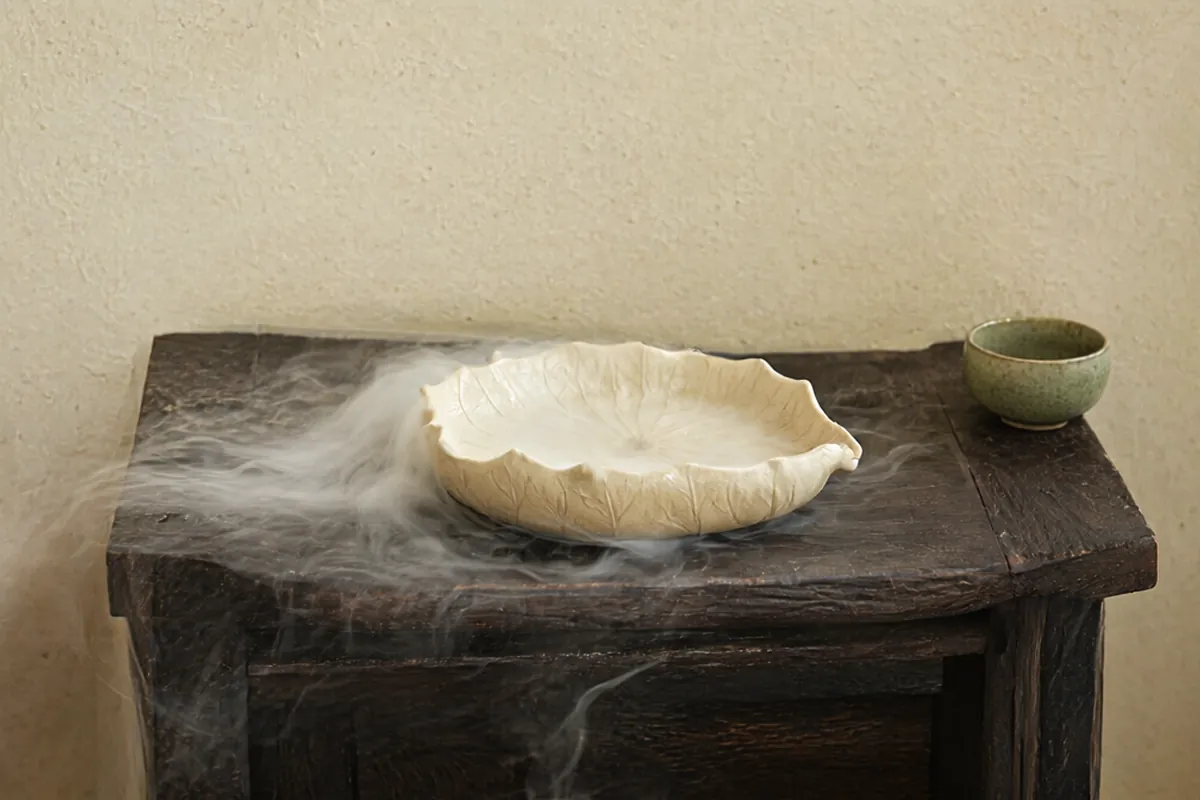
If you have searched for help with a backflow burner, you have probably seen this problem. It is almost always one of a handful of causes, and most are easy to fix.
| What you see | Likely cause | Fix |
|---|---|---|
| Smoke only rises from the tip | Cone has not burned down to the channel yet | Wait one to two minutes before judging |
| Smoke rises the whole time | Standard cone, not a backflow cone | Check the base for a hole; switch cones |
| Stream breaks up and scatters | Draft, fan or vent nearby | Move the burner or use one with a cover |
| Weak, thin flow | Cone not centered on the hole | Re-seat it upright over the opening |
| Cone goes out early | Lit too briefly, or damp cones | Light longer; store cones in a sealed jar |
| Flow stops after a few uses | Ash or resin buildup blocking the passage | Clean the cone hole and channel |
Temperature also plays a part. In a very warm room, or right next to a heater, the smoke stays warm longer and is more likely to drift up. A cooler, still room gives the most dramatic waterfall effect. Humidity can help too; some people find the flow looks thicker on damp days.
Finally, cone quality varies a lot. Cheap cones sometimes have a channel that is off-center or partly blocked. If one cone misbehaves on a burner that usually works well, try another cone from the same box before changing anything else.
Safety and placement
Backflow incense is still burning incense, so the usual fire sense applies.
- Never leave a lit cone unattended, and keep it out of reach of children and pets.
- Keep the burner well away from curtains, paper, dried flowers and anything that can catch.
- Set the burner on a heat-safe surface. Ash can drop, and the base near the cone can get warm.
- Ventilate the room after a session. The smoke is meant to be enjoyed for a short while, not to fill a closed space for hours.
- If you are sensitive to smoke or scents, keep sessions short and the room aired. Burning less often is perfectly fine.
A burner with a cover, or one placed inside a shallow bowl, keeps ash contained and makes cleanup easier. It also helps the smoke pool instead of drifting off.
Cleaning and care
Backflow cones leave more residue inside the burner than sticks do, because the smoke travels through the burner itself. A quick clean every few uses keeps the flow strong.
- Let the burner cool completely.
- Tip out loose ash over a trash can, then brush the cone hole with a small dry brush or a cotton swab.
- For sticky, brown residue on ceramic or clay, wipe with a cloth dampened with warm water. A little rubbing alcohol on a swab helps on stubborn spots in glazed ceramic.
- For resin burners, use only a soft dry brush or a barely damp cloth. Avoid soaking and harsh solvents, which can dull the finish.
- Let everything dry fully before the next cone. Moisture in the channel will stop the smoke from flowing.
Unglazed clay can darken a little over time where the smoke touches it. Many people like that patina, since it makes the piece look lived-in. If you prefer it clean, wipe it after each session before the residue sets.
Making it part of a small ritual
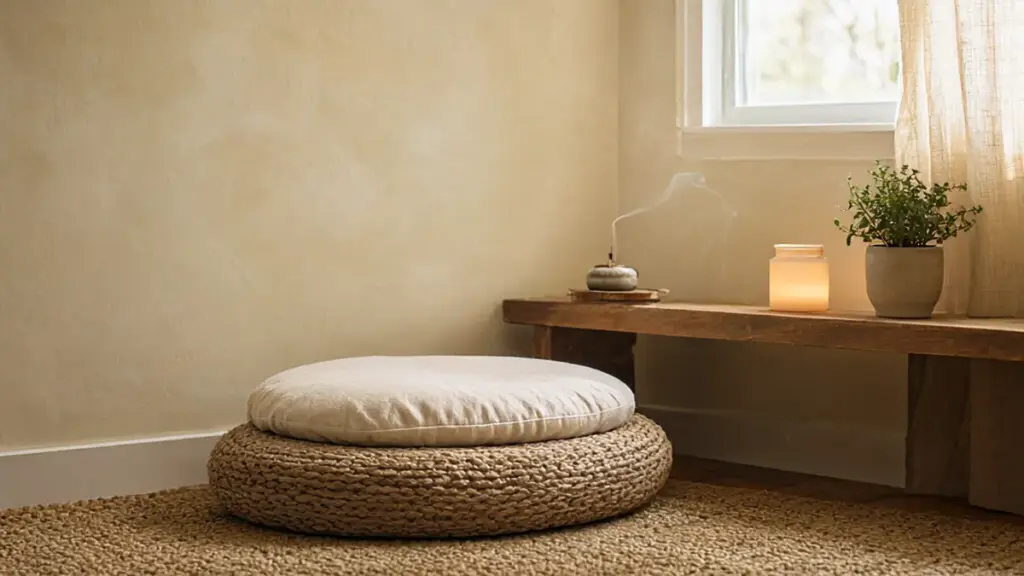
Part of the appeal of backflow incense is that it asks you to slow down. You cannot rush the smoke. Many people light a cone at the start of a reading session, a cup of tea or a few minutes of quiet breathing, and let the flow mark the time. When the stream fades, the session is over. If that sounds appealing, our guide to a calm corner at home pairs well with a burner on a low shelf, and our zen garden and Buddha decor collection includes several sculptural backflow designs that double as tabletop decor.
Frequently asked questions
Can you use regular incense cones in a backflow burner?
You can burn them, but the smoke will rise like normal and you will not get the waterfall effect. Backflow cones have a hollow channel in the base that sends the smoke down through the burner.
Can you burn backflow cones without a backflow burner?
Yes. On a plain heat-safe dish, a backflow cone simply sends smoke out from its base, so it pools around the dish. You will not get the shaped stream, but it works safely on any ceramic plate or tray.
How long does a backflow cone last?
Most backflow cones burn for about 10 to 20 minutes, depending on size and density. The downward flow usually starts a minute or two after lighting.
Why does my backflow burner stop working after a while?
Residue builds up in the cone hole and internal passage over time. Clean the opening with a dry brush or cotton swab every few uses and make sure the burner is completely dry before lighting the next cone.
Are resin backflow burners safe to use?
Resin burners are designed to sit under the cone, but the cone should rest on a heat-safe insert or cup rather than bare resin. Follow the burner’s instructions, use it on a heat-safe surface and never leave it unattended.
Ready to try it? Start with our incense holders, or see the mountain waterfall backflow burner. Free US shipping on orders over $50, and 30-day returns.