How to Create a Meditation Space at Home, Even in a Small Apartment
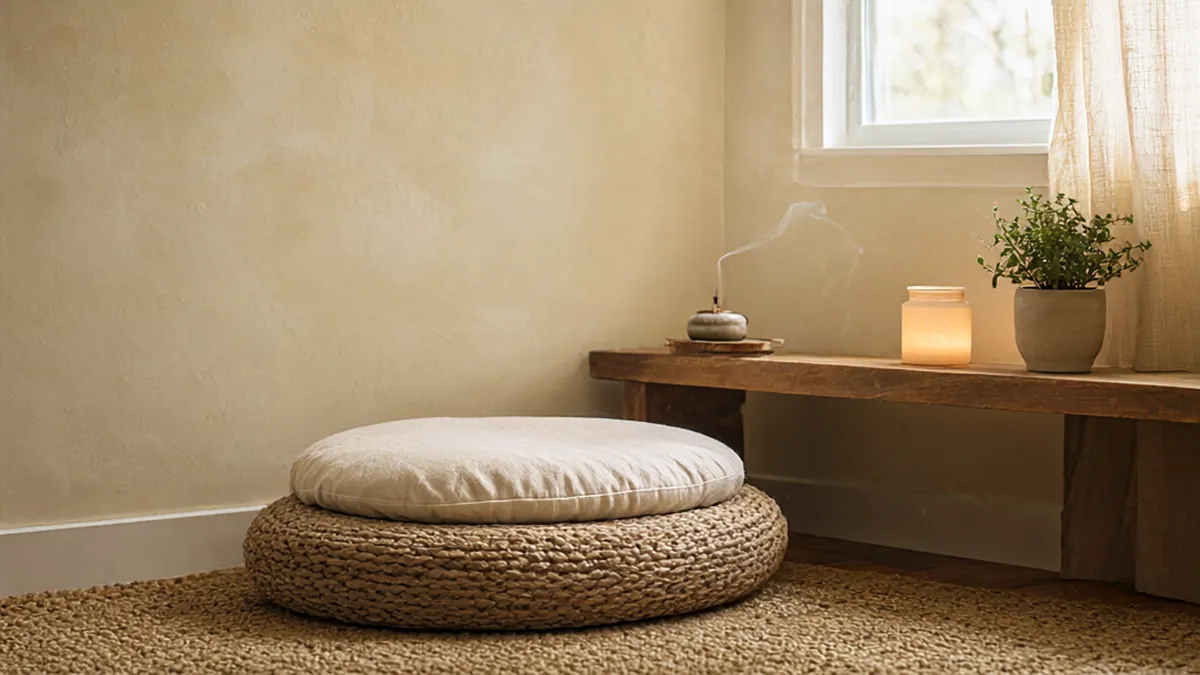
To create a meditation space at home, choose a quiet spot you can return to every day, add a cushion or chair that lets you sit upright without strain, keep the area clear of clutter, and add only a few calm objects such as a candle, a plant or something to mark the start of your practice. You do not need a spare room. A corner of a bedroom, a stretch of floor by a window or even a closet nook can work well if it is consistent and quiet.
Step 1: Choose the spot
The best meditation space is the one you will actually use. When you pick a place, think less about how it looks in photos and more about how it fits your day.
- Quiet at the time you practice. A spot next to the kitchen may be calm at 6 a.m. and chaotic at 6 p.m.
- Out of the main traffic path. You should not have to move your cushion every time someone walks by.
- Some natural light if possible. A window brings softness and a sense of time passing.
- Away from screens. Facing a TV or a desk full of work is a constant pull back to tasks.
Many people end up in the bedroom, because it is already private. If you do, try to face away from the bed and toward a wall or window so the space feels separate from sleep.
Step 2: Clear it
A meditation corner works partly because it is empty. Remove anything that is not part of the practice: laundry, chargers, stacks of mail. Clear a circle of floor about the size of a yoga mat. If the space has to share duty with something else, keep a basket nearby so you can tidy the other things away in seconds before you sit.
Step 3: Get the seat right
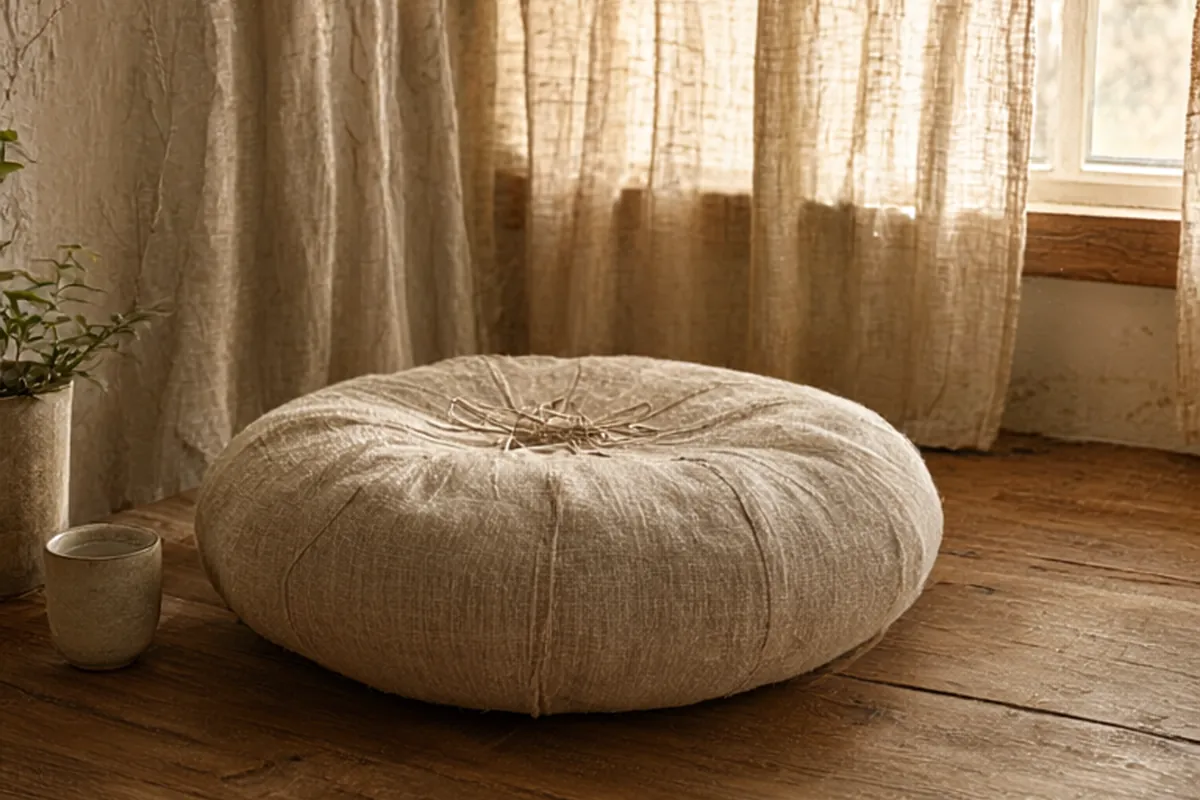
Comfort is not a luxury here. If your knees ache or your back slumps after five minutes, you will stop showing up. The goal is a seat that lets your hips sit a little higher than your knees and your spine stay upright with little effort.
| Seat | Good for | Notes |
|---|---|---|
| Round cushion (zafu) | Cross-legged or kneeling with the cushion between the legs | Raises the hips; firm filling holds its shape |
| Flat floor mat (zabuton) | Padding under knees and ankles | Often used under a zafu; works alone for short sits |
| Bolster or folded blanket | Kneeling, or supporting knees | Flexible and inexpensive to start with |
| Upright chair | Anyone with knee or hip discomfort on the floor | Feet flat, back away from the backrest |
A common pairing is a firm round zafu on top of a flat mat, so your hips are lifted and your knees and ankles are cushioned. Our meditation and yoga collection includes cotton zafu cushions, woven floor cushions and a round straw floor cushion that works as a base layer. A chair is a perfectly good choice too. There is no prize for sitting on the floor.
Step 4: Light, sound and scent
Light
Soft, warm light helps a space feel calm. During the day, natural light from a window is ideal. In the evening, a lamp with a warm bulb or a candle in a simple holder is easier on the eyes than overhead light. If you use candles, keep them on a stable, heat-safe holder and never leave them burning when you step away.
Sound
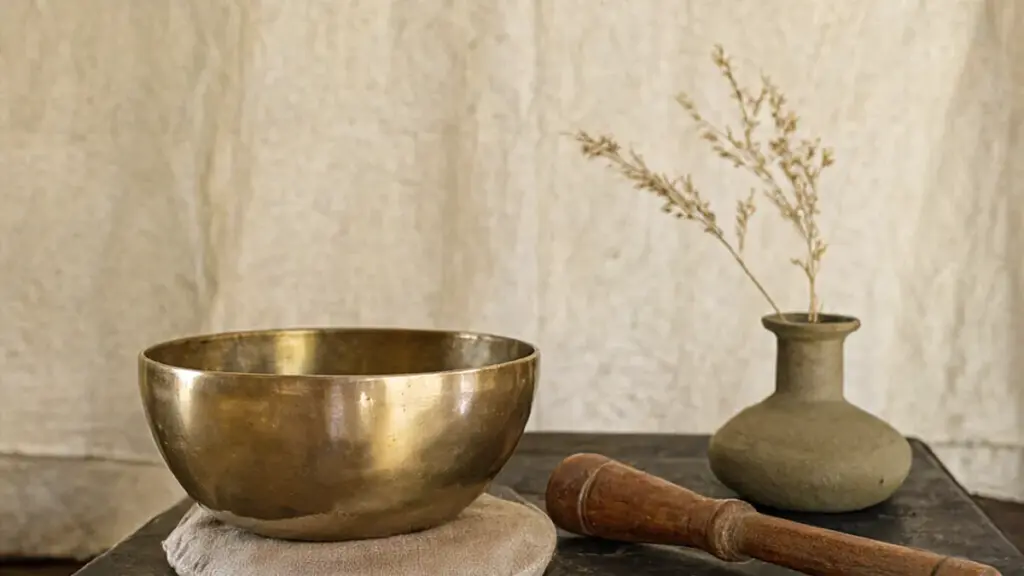
Total silence is rare in most homes, and that is fine. Some people like a small bell or singing bowl to mark the beginning and end of a session. Others use a soft timer on their phone, set face down and on silent mode. Earplugs are an honest, low-tech answer for noisy apartments.
Scent
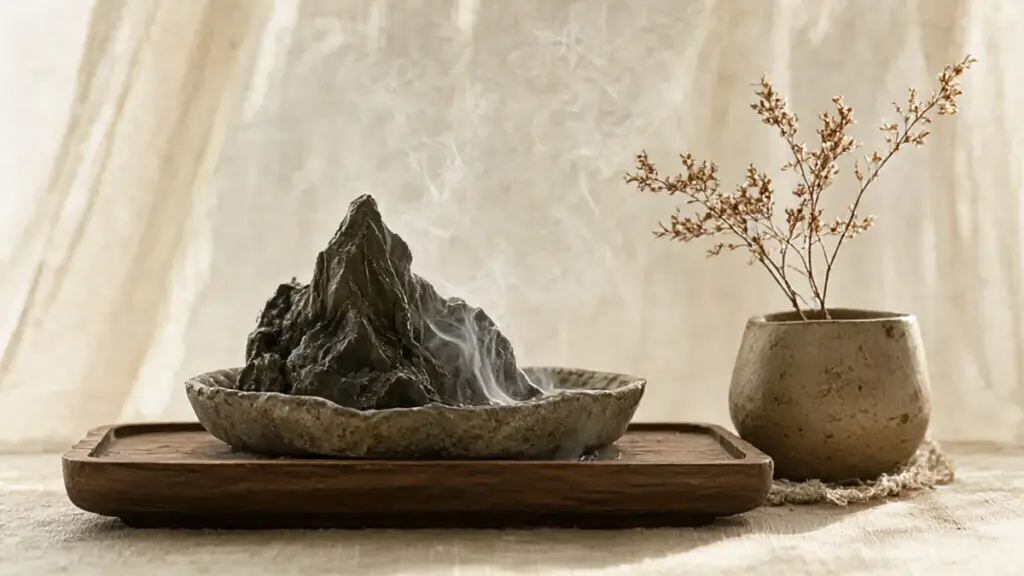
A familiar scent can become a cue that it is time to sit. A short incense session before you begin, or a candle you only light in this corner, works well. Keep it light, ventilate afterwards and skip scent entirely if anyone in the home is sensitive to smoke or fragrance. Our incense holders range from simple ceramic stick holders to backflow burners.
Step 5: Add a few meaningful objects
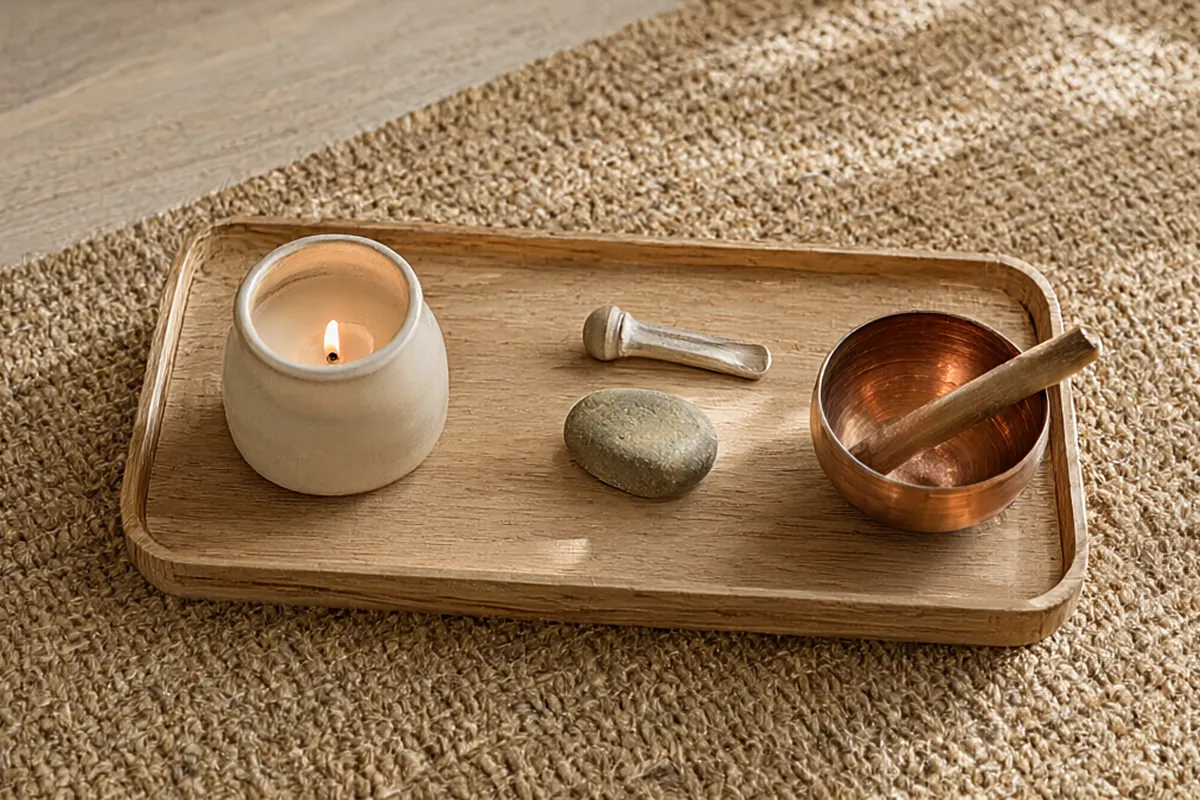
This is where many people overdo it. A meditation corner is not a shrine to fill. Three to five objects is usually plenty. Some ideas:
- A small plant or a single stem in a vase, for something living.
- A stone, shell or piece of wood you picked up yourself.
- A candle in a plain ceramic or iron holder.
- A small bowl or bell to begin and end your session.
- A figure or image that matters to you, if it helps you settle. Keep it respectful and simple.
Put them on a low surface in front of you: a small bench, a wooden tray on the floor or a narrow shelf at eye level when seated. Keeping the objects grouped on one tray also makes it easy to move the whole setup when you need the floor for something else.
Small-space ideas
Many people search for meditation room ideas and feel discouraged because they do not have a room to spare. A space of about three feet by three feet is enough.
- The window corner. A cushion and a plant by a bedroom window. Nothing else needed.
- The closet nook. Remove the doors or leave them open, add a cushion, a small shelf and a warm light.
- The tray method. Keep cushion and tray in a basket. Set them out each morning, put them back afterward.
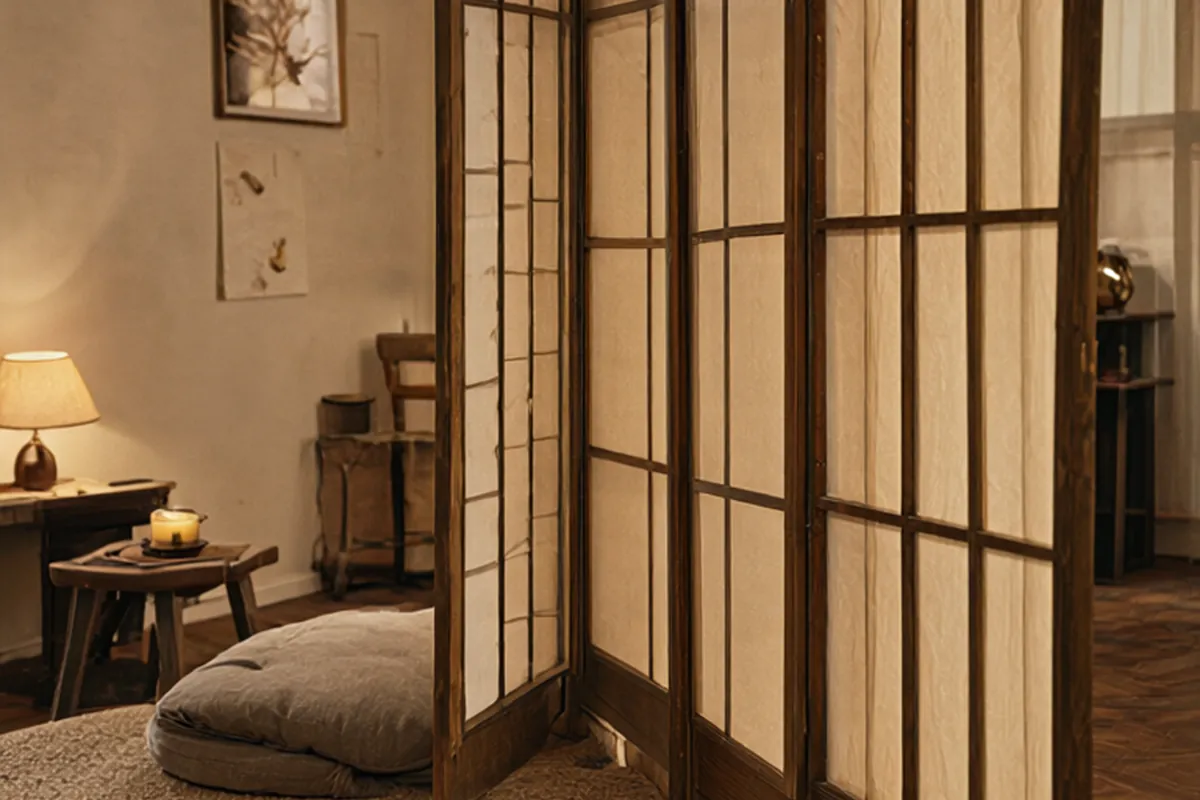
- The divider. A folding screen or a tall plant can mark off a corner of a living room so it feels separate.
- The balcony or porch. In mild weather, a cushion outside can be the calmest seat in the house.
Keep the space in use
A meditation space works best as a habit, not a decoration. A few tips that help:
- Same time, same place. Tie your practice to something you already do, like after your morning coffee or before bed.
- Start short. Five minutes a day is a real practice. Lengthen it when it feels natural.
- Keep it ready. If you have to set up from scratch every time, you will skip it. Leave the cushion out if you can.
- Refresh it now and then. Swap the stem in the vase, dust the shelf, wash the cushion cover. Small care keeps it inviting.
- Protect it. Gently ask others in the home to keep the corner clear. It helps the space stay yours.
Meditation is a personal practice, and a space is only a support for it. If you are new, a guided class, app or local group can help you find a style that suits you. Your corner simply makes it easier to begin.
Frequently asked questions
How much space do I need for a meditation corner?
About three feet by three feet is enough for a cushion and a small surface in front of you. A larger space is nice but not necessary.
Can I make a meditation space in my bedroom?
Yes, and many people do. Face away from the bed if you can, keep the corner clear of clutter, and use a cushion or rug to mark it as its own area.
What do I need to start a home meditation space?
Only a comfortable seat and a quiet spot. A cushion or chair, a clear area and perhaps a candle or plant are plenty. Add other objects slowly, if they help.
Should I use incense or candles when meditating?
They are optional. Some people find a familiar scent or soft light helps them settle. Keep flames on heat-safe holders, ventilate the room and skip them if anyone is sensitive to smoke.
Ready to set up your corner? Start with a seat from our meditation and yoga collection. Free US shipping on orders over $50 and 30-day returns.