The Best Vase for Dried Flowers: Shape, Size and Material Explained
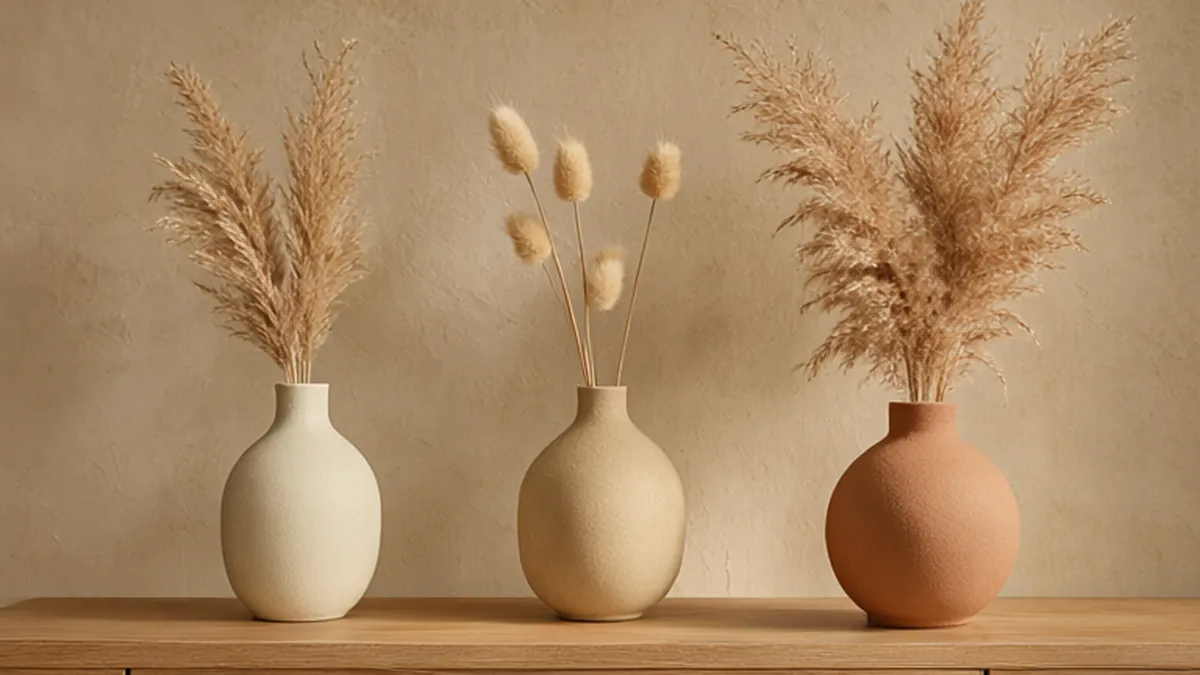
The best vase for dried flowers usually has a narrow neck or a heavy base, a matte or textured finish, and a height of roughly one third to one half of the finished arrangement. Ceramic and stoneware-look vases are the most popular choice because they are stable, opaque and suit the soft colors of dried stems. Because dried flowers need no water, you can also use vases without a watertight glaze or with a drainage hole, which opens up many decorative options.
Why dried flowers need a different kind of vase
Fresh flowers need water, a clear view of the stems is often part of the look, and a wide mouth helps you arrange a full bunch. Dried flowers change the rules:
- No water. The vase does not have to be watertight, so unglazed, textured or decorative pieces become practical.
- Light, stiff stems. Dried stems are lighter than fresh ones and they do not bend into place. The vase has to hold them where you put them.
- Top-heavy shapes. Pampas grass and large seed heads catch air and can tip a light vase. Weight at the base matters.
- Bare stems are less attractive. Dried stems are often brittle and brown, so an opaque vase that hides them usually looks better than clear glass.
Shape: what holds dried stems best
| Shape | Best for | Why it works |
|---|---|---|
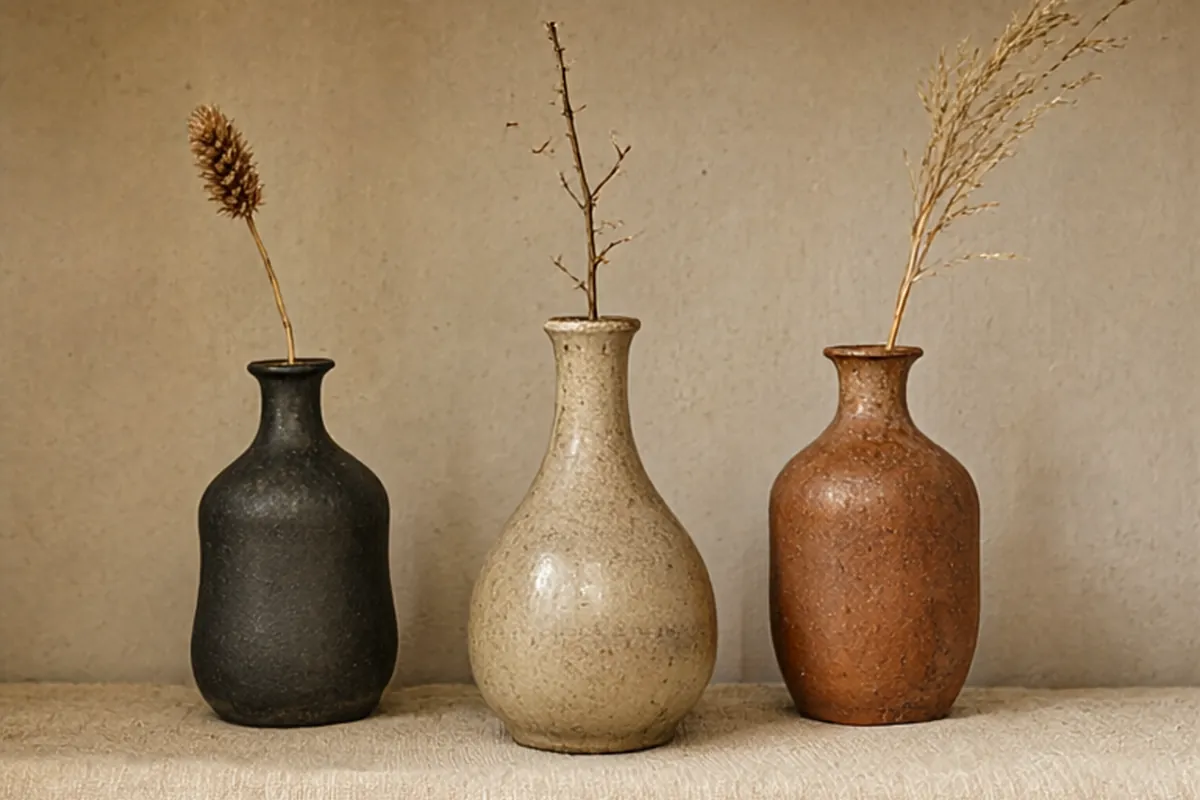
| Narrow neck, round body | A few stems, single branches | The neck holds stems in place without any foam or tape |
| Bud vase | One to three small stems | Ideal for bedside tables, shelves and small spaces |
| Tall cylinder | Pampas grass, long grasses | Supports long stems; choose a heavy one for stability |
| Flared or trumpet mouth | Loose, airy bunches | Lets stems fan out naturally |
| Wide, low bowl | Short stems, seed pods | Usually needs a pin holder or a little crumpled paper inside |
If you only buy one vase for dried flowers, a medium vase with a narrow neck and a solid base is the most forgiving. It holds two stems or ten and stays upright.
Size and proportion
A simple rule used by florists works just as well for dried arrangements: the arrangement should be about one and a half to two times the height of the vase. In other words, the vase is roughly one third to one half of the total height.
- Too small a vase makes tall stems look like they are about to fall.
- Too large a vase swallows a small bunch and makes it look sparse.
Quick sizing guide
- Bud vases (4 to 7 in): single stems, small wildflowers, lavender, a sprig of eucalyptus.
- Medium vases (8 to 12 in): mixed bunches, bunny tails, statice, small pampas plumes.
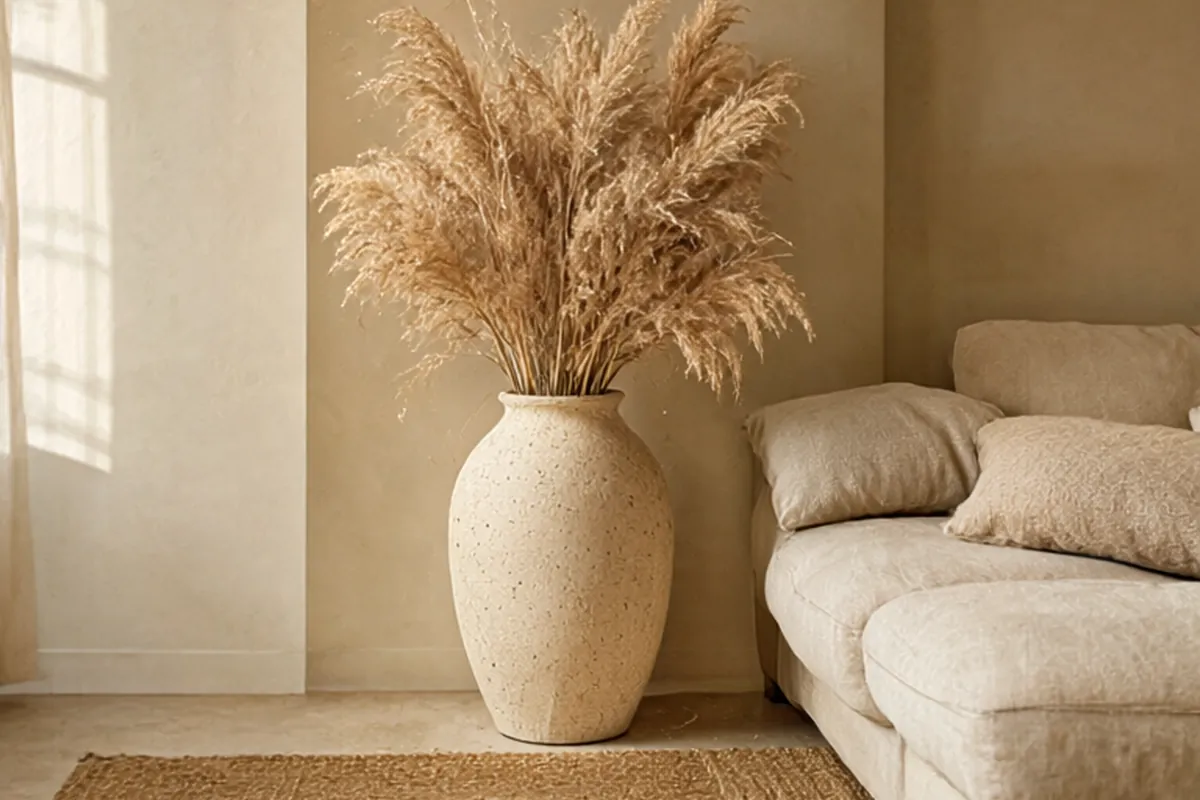
- Tall floor or console vases (14 in and up): full pampas grass, palm spears, long branches.
For a floor-standing pampas display, choose the heaviest tall vase you can, or add a layer of sand or small stones in the bottom for weight.
Material and finish
Ceramic and stoneware-look
The most popular choice for dried flowers. Ceramic is heavy enough to be stable, opaque so it hides stems, and available in the matte, earthy glazes that suit dried colors. Textured finishes, ribbed surfaces and uneven, organic shapes fit the wabi-sabi look, which values simplicity and imperfection. Our wabi-sabi vases collection is built around exactly these shapes and finishes.
Glass
Clear glass works for a minimal look, but it shows every stem. Tinted, frosted or amber glass is a good middle ground.
Metal, wood and woven materials
Brass, iron and wooden vessels give a warmer or more rustic feel. Woven baskets work well for loose, generous bunches of pampas. These are often lighter, so add weight inside if your stems are tall.
Glossy versus matte
Dried flowers have a soft, dusty look. Matte and satin finishes usually feel more natural next to them. A glossy glaze can work as contrast, especially in deep colors like black, blue or green.
Matching the vase to the stems
- Pampas grass: tall, heavy, cylinder or bottle-shaped vase. Neutral colors let the plumes stand out.
- Bunny tails and soft grasses: medium vase with a narrow neck so the tufts sit up in a cluster.
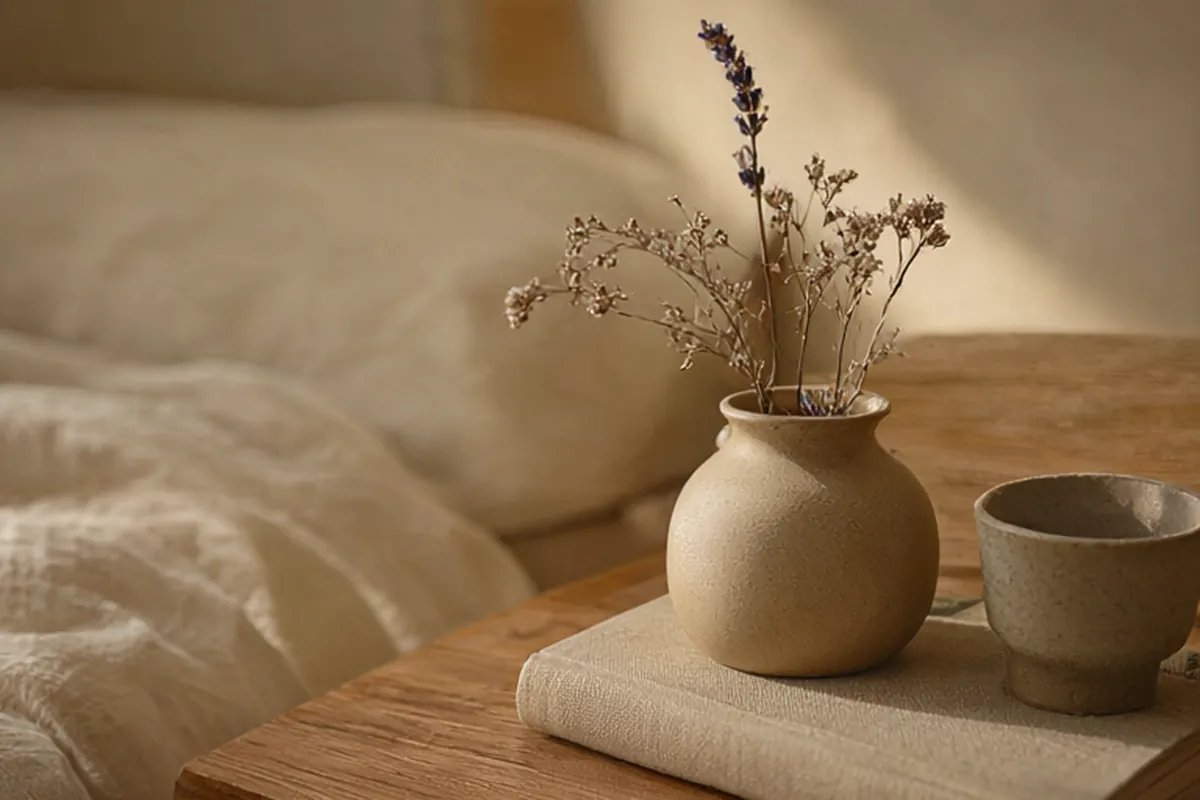
- Lavender: slim bud vase or small jug. Bundle stems together for a tidy look.
- Dried roses and strawflowers: small to medium vase, short stems, a little crumpled paper inside if they lean.
- Branches and palm spears: tall, sculptural vase with a wide base. Use an odd number of stems.
- Eucalyptus: medium vase with a flared mouth so the leaves can spread.
Flared vases with an earthy glaze, like our hand-painted ceramic vase for dried flowers, are designed with no drainage hole and a wide mouth so loose bunches spread naturally.
Styling ideas by room
- Entryway console: one tall vase with pampas or branches, plus a small vase or tray for keys.
- Coffee table: a low, wide vessel with short stems, kept below eye level for conversation.
- Dining table: two or three bud vases in a row, each with a single stem.
- Shelves: group three vases of different heights and shapes in a related color, the classic trio.
- Bedroom: a small vase with lavender or a few wildflowers on the nightstand.
- Bathroom: dried flowers handle a little humidity, but keep them away from the shower spray.
One more trick that stylists use: repeat a color from the room in the vase or the stems. A clay-colored vase near a terracotta cushion, or a cream vase next to linen curtains, makes the arrangement feel like it belongs to the space rather than sitting on top of it.
For grouping, mix heights and keep a common thread, such as the same color family, the same finish or the same type of stem across the vases.
Care tips for dried flowers and vases
- Keep dried flowers out of direct sun to slow fading.
- Dust them gently with a hair dryer on the coolest, lowest setting held well away.
- Pampas and grasses shed. A light spray of unscented hairspray reduces this.
- Never put fresh flowers with water in a vase that is not glazed inside or has a drainage hole.
- Wipe the outside of ceramic vases with a dry or slightly damp cloth.
Frequently asked questions
Do dried flowers need a vase with water?
No. Dried flowers should be kept dry. Water will make them soft and can cause mold, so always use a dry vase.
What kind of vase is best for pampas grass?
A tall, heavy vase with a narrow or medium opening. Ceramic floor vases work well. Add sand or stones to the base if it feels top-heavy.
Can I use a vase with a hole in the bottom for dried flowers?
Yes. Since there is no water involved, a drainage hole does not matter. It only becomes an issue if you later want to use fresh flowers.
How many dried stems should I put in a vase?
Odd numbers often look more natural, such as three, five or seven. For a bud vase, one to three stems is plenty. For a tall vase, start small and add until it feels balanced.
Find a shape for your stems in our wabi-sabi vases collection. Free US shipping on orders over $50 and 30-day returns.