How to Play a Singing Bowl: Striking, Rimming and Fixing the Rattle
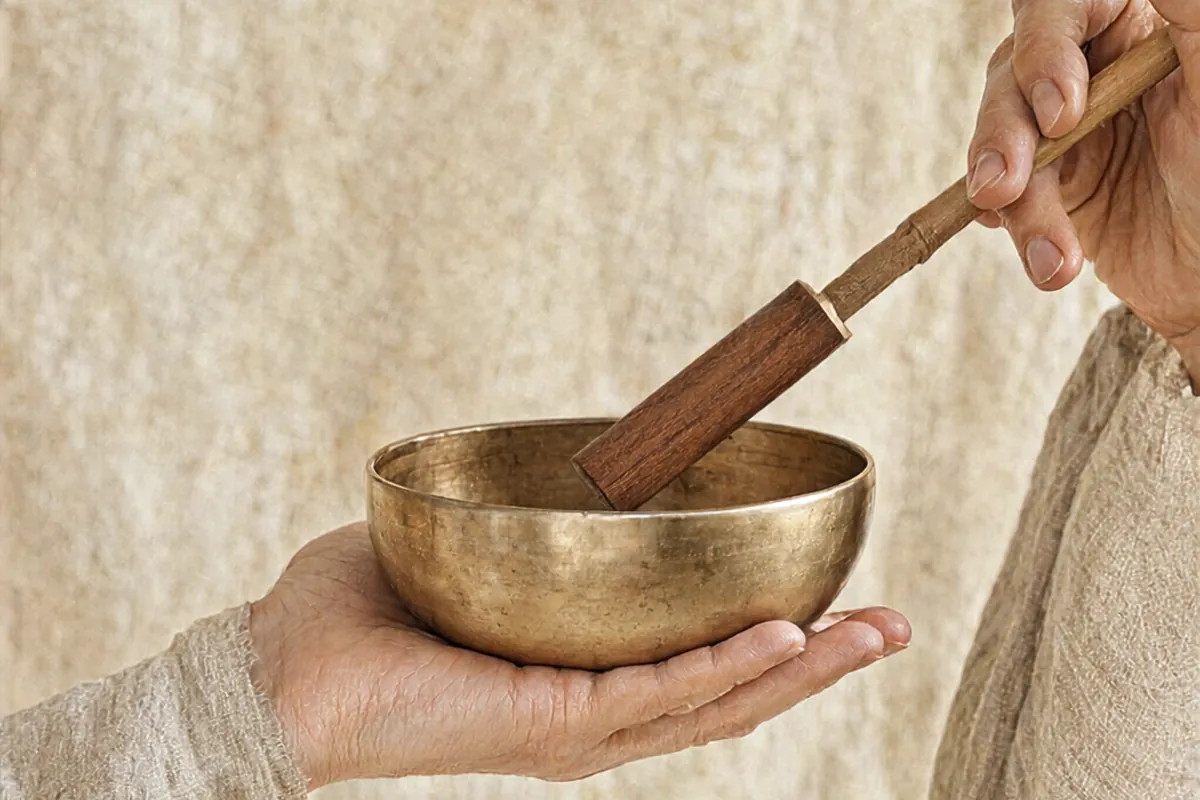
To play a singing bowl, rest it on the flat palm of your hand or on a cushion, strike the outer side once gently with the mallet to start it vibrating, then press the mallet against the outside of the rim and circle it slowly and evenly. Keep your arm moving from the shoulder, not just the wrist, and keep the pressure steady. After a few rotations the bowl begins to “sing” with a sustained tone. If it rattles, slow down and press a little more firmly.
What a singing bowl is
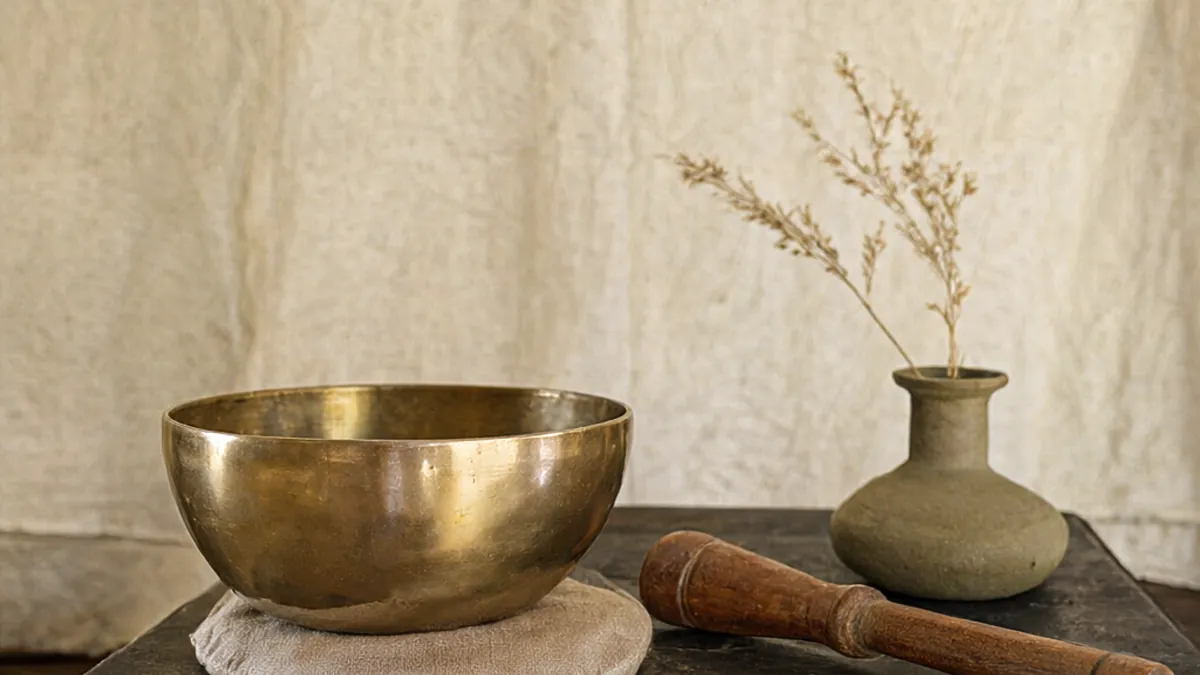
A singing bowl is a standing bell: a metal bowl that produces a tone when struck or when a mallet is rubbed around its rim. Rubbing makes the walls vibrate continuously, which is where the long, humming “singing” sound comes from. Bowls vary a lot in size, shape, wall thickness and metal, so each one sounds slightly different. Larger bowls tend to have a deeper tone and a longer ring; smaller bowls are higher and brighter.
Many people use singing bowls to mark the start and end of a meditation, a yoga class or a quiet moment in the day. You do not need any musical training to play one.
What you need
- The bowl. Any size works for learning. Medium bowls, around 4 to 6 inches, are often easiest for beginners.
- A mallet (also called a striker or puja). Usually wood, sometimes wrapped in leather or suede. Bare wood gives a brighter tone; leather gives a softer, warmer one.
- A cushion or ring. Lets the bowl sit on a table without muffling the vibration. Your flat palm works too.
Many bowls are sold as sets that include all three, like the singing bowl set with mallet and cushion in our collection.
How to hold the bowl
The key is to touch the bowl as little as possible. Any contact with the walls dampens the sound.
- Hold your non-dominant hand flat, palm up, fingers together.
- Set the bowl in the center of your palm so only the base touches your hand.
- Keep your fingers flat and away from the sides.
Small bowls can also be held on your fingertips, spread like a little tripod. Larger or heavier bowls are easier to play on a cushion placed on a table or on the floor in front of you.
Method 1: Striking
This is the simplest way to start, and it produces a clear, bell-like tone.
- Hold the mallet like a pencil, near its middle, at a slight angle.
- Gently tap the outer wall of the bowl, about a third of the way down from the rim.
- Let the sound ring out until it fades completely.
Strike softly. A gentle tap produces a fuller, longer tone than a hard hit, which can sound harsh. Try the leather side and the bare wood side of the mallet to hear the difference.
Method 2: Rimming (making it sing)
This takes a few minutes of practice, but once it clicks it feels very natural.
- Warm up the bowl. Strike it once softly to get it vibrating.
- Find the rim. Place the mallet against the outside edge of the rim, held vertically like a pen, with the wooden or leather surface touching the bowl.
- Circle slowly. Move the mallet around the rim in a smooth circle, at an even speed. Use your whole arm, moving from the shoulder, as if you were stirring a large pot.
- Keep steady pressure. Press firmly but not hard, and keep the same pressure all the way around.
- Listen. After two or three circles the tone starts to build. Keep going at the same pace and it will grow louder and steadier.
- Finish. Lift the mallet away and let the bowl ring out on its own.
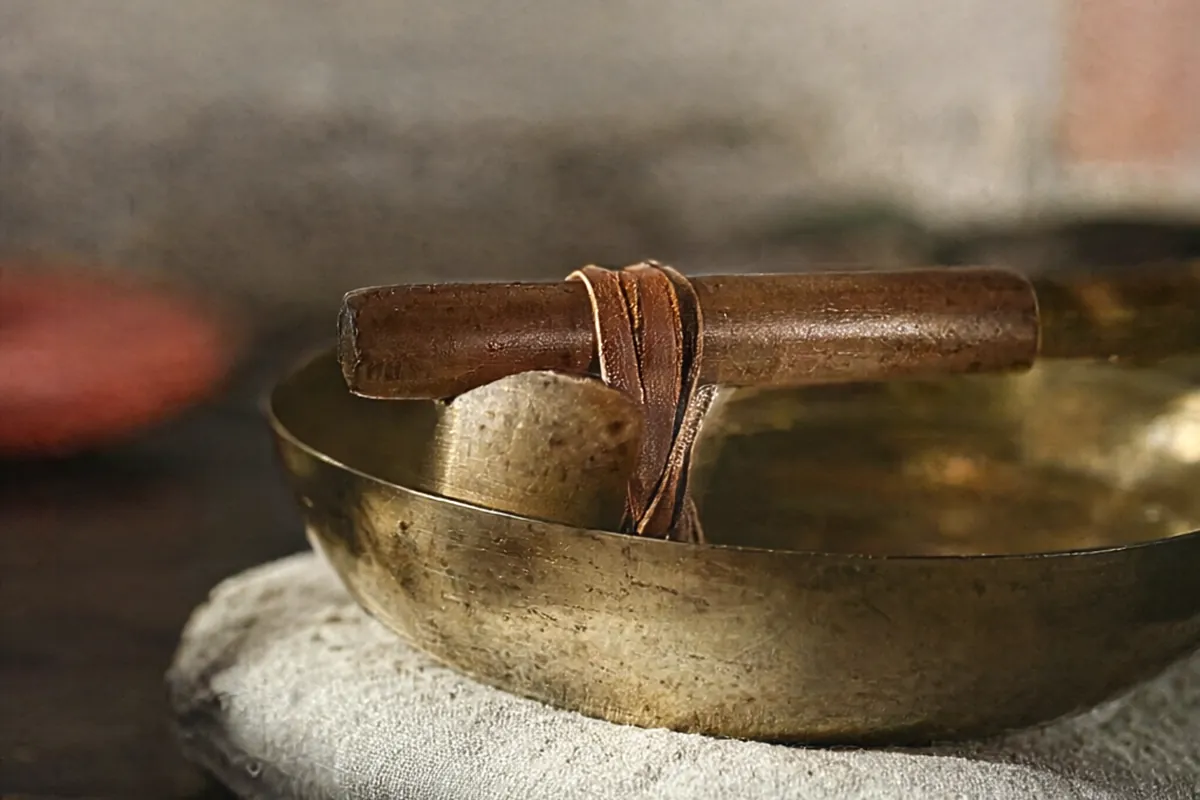
Choosing a mallet
The mallet shapes the sound almost as much as the bowl does. If a bowl seems hard to play, try a different striker before deciding the bowl is the problem.
| Mallet | Sound | Good for |
|---|---|---|
| Bare wood | Bright, clear, more overtones | Small and medium bowls, quick response when rimming |
| Leather or suede wrapped | Softer, warmer, fewer overtones | Reducing rattle, gentle tones, larger bowls |
| Felt or padded | Deep and round | Striking larger bowls |
A thicker mallet usually makes rimming easier because there is more surface in contact with the bowl. Many mallets have one wrapped end and one bare section, so you can switch without changing tools.
Troubleshooting
The bowl rattles or buzzes
This is the most common beginner problem. It happens when the vibration of the bowl becomes stronger than the contact between the mallet and the rim, so the mallet bounces. Fixes:
- Slow down your circles.
- Press a little more firmly.
- Switch to the leather-wrapped side of the mallet.
- Lift the mallet for a second to let the bowl settle, then continue.
No sound at all
- Strike the bowl first to start the vibration.
- Check that your fingers are not touching the walls.
- Try a bare wooden mallet; some bowls respond better to it.
- Increase the pressure slightly and keep the speed constant.
The sound keeps fading in and out
Uneven speed or pressure is usually the cause. Focus on making the circle smooth and keep your wrist relaxed. Slower is almost always better than faster.
Ways to use a singing bowl
- Begin and end a meditation. A single strike at the start and end gives the session a clear frame.
- Listen to the tone fade. Strike once and follow the sound until you can no longer hear it. It is a simple attention exercise.
- Mark a transition. Between work and evening, or before a yoga practice, a few moments of sound can help you pause.
- In a group. Teachers often use a bowl to call a room to quiet.
You can explore bowls of different sizes, along with cushions and mats, in our meditation and yoga collection.
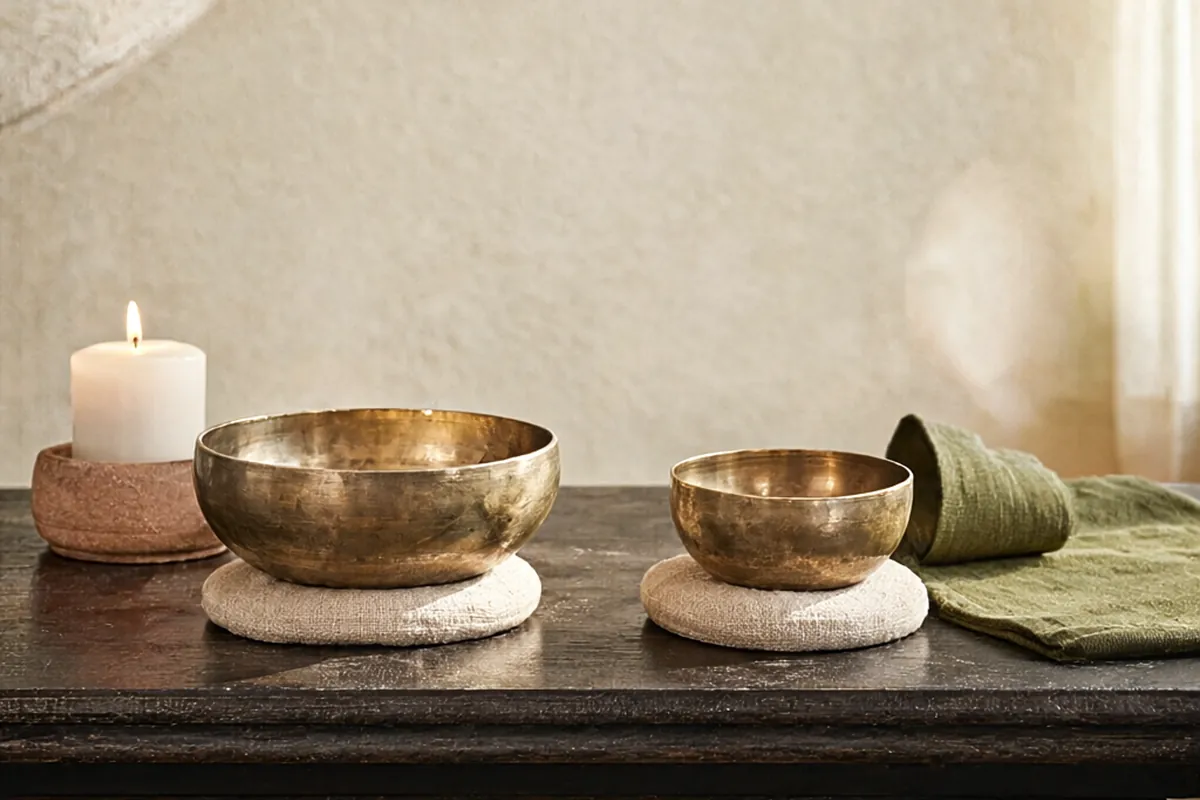
Caring for your bowl
- Wipe it with a soft dry cloth after use to remove fingerprints.
- Avoid water and harsh polishes on metal bowls, which can affect the finish.
- Store it on its cushion or wrapped in a cloth, away from hard surfaces that could dent the rim.
- Do not put anything heavy inside it, and do not drop it; small dents change the sound.
- Copper and brass naturally darken over time. Many owners like this patina; if you prefer shine, use a gentle metal cleaner made for that material and test it on the base first.
Frequently asked questions
Why does my singing bowl rattle?
The bowl is vibrating more than the mallet can stay in contact with. Slow your circles, press a little more firmly, or use the leather side of the mallet.
Should I strike the bowl before rimming?
It is not required, but a gentle strike first helps the bowl start singing faster, especially for beginners.
Which way should I move the mallet?
Either direction works. Pick one that feels comfortable and keep the speed and pressure steady.
Can I put water in a singing bowl?
Some people add a little water to watch it ripple, but it can mark or tarnish metal bowls. Dry the bowl fully afterward if you try it.
Looking for your first bowl? See the copper singing bowl with leather mallet and the rest of our meditation and yoga collection. Free US shipping on orders over $50 and 30-day returns.